SIMPLE.

PRACTICAL.

TRUSTED.

VBP+ BLOG & NEWS

Producer Resources

Are you a Canadian beef producer working toward VBP+ Certification for the first time or preparing for a renewal assessment? 

VBP+ wants to ensure you feel ready and have resources at your fingertips so your on-farm assessment can be completed more efficiently, in less time and with greater ease.

Start Here!

If you are considering certification, training is the place to start. VBP+ training explains the VBP+ Standard criteria and examines the records needed for an on-farm assessment.

Pre-Certification Consultation

Producers who participate in a pre-certification consultation with a VBP+ Coordinator or watch a pre-certification webinar prior to an on-farm assessment are consistently better prepared.

The pre-certification webinar includes valuable tips to ensure the on-farm assessment process is clear and simple. Watch the recording for key information:
•    How to get ready for an on-farm assessment
•    What to expect before the assessor visits your operation
•    Where will the assessor want to visit on your farm
•    Incentives available with your certification
•    CRSB Certification details
•    Q&A for unique operational systems and processes

What To Expect During an On-Farm Assessment

Let’s talk: On-farm assessments are designed to feel like a conversation between you and the assessor. VBP+ assessors are producers themselves and are experienced with cattle production in Canada.

Take a tour: During the farm walk-through, you can plan to show the assessor a variety of areas on your farm such as cattle, calving grounds, water sources, feeding areas, handling facilities, feed storage, pastures, medicated feed storage and equipment, minerals and supplements, non-ruminant feeds, chemical storage, lagoons or septic systems, animal health product storage and delivery equipment. What can’t be covered during the tour (due to remote location or weather) can be explained verbally.
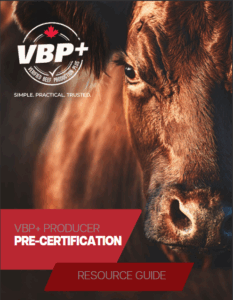
Show off your records: Your on-farm assessment will also include a discussion about critical records. Some certification criteria can be met through verbal descriptions, while others require that you show physical records in the way that works best for you. There is no mandatory record-keeping format, however VBP+ offers a selection of record-keeping templates if you choose to use them. At the completion of the assessment, the assessor will discuss any actions that may need to be taken on your operation to meet specific criteria and work with you to create a plan for corrections if needed.

What Will Be Assessed on My Operation?

To become VBP+ Certified, various criteria are assessed on-farm, providing a holistic view of production practices on the operation.

Animal Health: Examines how animal health products are used on your operation and how cattle health is managed. Criteria are based on the beef industry Hazard Analysis Critical Control Point (HACCP) plan to reduce risks of negative outcomes for cattle health or food safety.

Animal Nutrition: Assesses your operation’s process for ensuring cattle have adequate quantities and quality of feed and water. These criteria include how cattle condition is monitored, how medicated feed is managed and how contamination risks are avoided on the operation.

Animal Care: Examines your processes for cattle handling and shelter, management of painful procedures and animal stress as well as how cattle are regularly monitored on your operation. The requirements for this section are informed by the Code of Practice for the Care and Handling of Beef Cattle.

Vulnerable, Distressed and High-Risk Cattle: Criteria assess how cattle with a poor prognosis are managed on your operation. Specifically, this section covers euthanasia decision making, euthanasia processes and how operations manage deadstock.

Transportation: Examines practices when transporting cattle, including pre-transport checks to ensure cattle are free of withdrawals and physical hazards and are fit for transport, as well as demonstrating an understanding of transport regulations for compromised or unfit cattle and transfer of care documentation for cattle transferred to a new owner.

Biosecurity: Assesses on-farm practices to minimize the risks of disease spreading onto, off and within your operation, including management of animal movements, visitors, tools and equipment. This section also examines how operations work with their veterinarian to prevent and manage disease. This section is informed by the Canadian Beef Cattle Biosecurity Standard.

Environmental Stewardship: Examines how you work to reduce your operation’s impact on the environment, including management of water, air quality, soil nutrients and land resources. This section also examines processes for wildlife management and chemical inputs, as well as practices to prevent foreign objects from penetrating cattle hides on the operation.

Emergency Response and Preparedness: Evaluates your plans to manage disasters or emergencies on your operation. This section is intended to encourage producers to think about how to respond to an emergency before it happens, thereby minimizing damage and stress if an incident were to occur.

Training and Mentoring: Addresses the management of human resources on your operation. Even family operations without hired staff benefit from a plan to ensure a safe work environment and growth opportunities for people working on the farm.

Community and Leadership: Assesses how your operation interacts with the broader community and integrates new technologies and innovations. Innovation and community involvement can mean different things in different operations, so this standard is not meant to be prescriptive, but rather to recognize the efforts beef producers are making as leaders in their communities, the values of their operation and their efforts towards production efficiency.

How Do I Score?

Criteria are assessed with a scoring system from 0 to 3, reflecting the depth of implementation for a particular practice or process on the operation. The scoring system is generally based on the following continuum:

0 – No awareness or knowledge of the criteria

1 – Knowledge and verbal description of how your operation meets the criteria

2 – Records to prove implementation of the criteria along with a verbal description of the process

3 – Written protocol of process and records to prove implementation

Some criteria, called Critical Control Points (CCP), are criteria which require records. These criteria are mostly on-farm food safety criteria and are used to prove a commitment to producing safe and quality beef. CCPs are required criteria. A minimum score of two is required for these criteria. All other criteria are standard criteria. A minimum score of one is required for these criteria.

What Do I Have To Do for Renewal Assessments?

To maintain the rigor of the five-year assessment cycle, VBP+ performs an assessment of your operation every year. The cycle begins in year one with the on-farm assessment. Then, in years two through five of the assessment cycle, simple records assessments and self-declarations replace the on-farm assessment.

VBP+ is here to help!

VBP+ is committed to helping beef producers feel confident and prepared for their on-farm assessment. For more resources, producers are encouraged to contact their VBP+ provincial coordinator for more information or to explore these related resources:

agriculture management with VBP+ online tools
Planning for re-certification can make the experience smooth and convenient. Photo credit: VBP+ stock photo.

What happens at the end of the five-year certification cycle? What can I do, as a producer, to ensure my certification (s) remains active while we work through the logistics of re-certification? These are questions we get often, so we will walk you through the process.

When your operation has completed the initial on-farm assessment and your certifications (VBP+ and CRSB) become active, the date of that initial on-farm assessment becomes your Anniversary Date. Your certification events, records assessments and self-declarations, next on-farm assessment and notifications around these events are based on that Anniversary Date. That Anniversary Date is also an important guideline to maintaining an active certification. Your certification is active from the one Anniversary Date to twelve months after, or the Anniversary date of the following year.

VBP+ Delivery Services Inc. (VBP+ Inc.) sends notifications of the annual re-certification events (records assessments, self-declarations and the next on-farm assessment starting three months prior to the Anniversary Date. This is done to ensure that you, the producer has everything they need to complete the requirements prior to or by the Anniversary date, maintaining your active certification. When you have completed the requirements and receive your active certificate, you will also be informed of what your next event will be and what your Anniversary Date is. For example, when you complete the Year 5 Self-Declaration, you will receive your active certificate and your assessment report. The report will include a summary of the assessment, any corrective actions assessed, what your next assessment event will be and when it is due.

When you receive that Year 5 assessment report and active certificate, there are a few things you can be thinking about prior to your next on-farm assessment.

  • Are you going to renew your certification? There are benefits to maintaining your certification, you can check them out here.
  • Is your Anniversary Date working for you and your operation? If your initial on-farm assessment occurred during a time that is inconvenient, we can adjust to a time prior to that Anniversary date (this is important) that is more convenient.
  • Does your operation need some pre-certification support? Your provincial coordinator is more than happy to walk through the certification process and requirements with your operation prior to your assessment.
  • Coordinating the logistics of the re-certification process, application, payment, assigning an assessor, finding a time that works for both your operation and the assessor can be a time-consuming process. Don’t leave any of these steps to the last minute, communicating with our certification coordinator early, at least three months prior to your Anniversary Date can help ensure the re-certification process is smooth and convenient for your operation and avoid disruption to the active status of your certification.

Renewing your certification doesn’t have to be stressful or inconvenient. VBP+ and VBP+ Inc. can help with any questions you might have or have a look through our resources to see if there are any that might enhance your records or help your operation speak to their practices, processes or values. Check them out at www.verifiedbeef.ca.

barley crop

In many parts of western Canada this year, rain came early and made for a solid grass year. Unfortunately, the rest of the summer brought mostly extreme heat with little moisture other than a handful of storms that brought extreme wind and hail with them. This has left many grain farmers looking to salvage their damaged crops by repurposing them into livestock feed. 

Cattle are the ideal up-cycler for products that aren’t suitable for human consumption, but there are a few factors to take into consideration to make sure that salvage is successful.

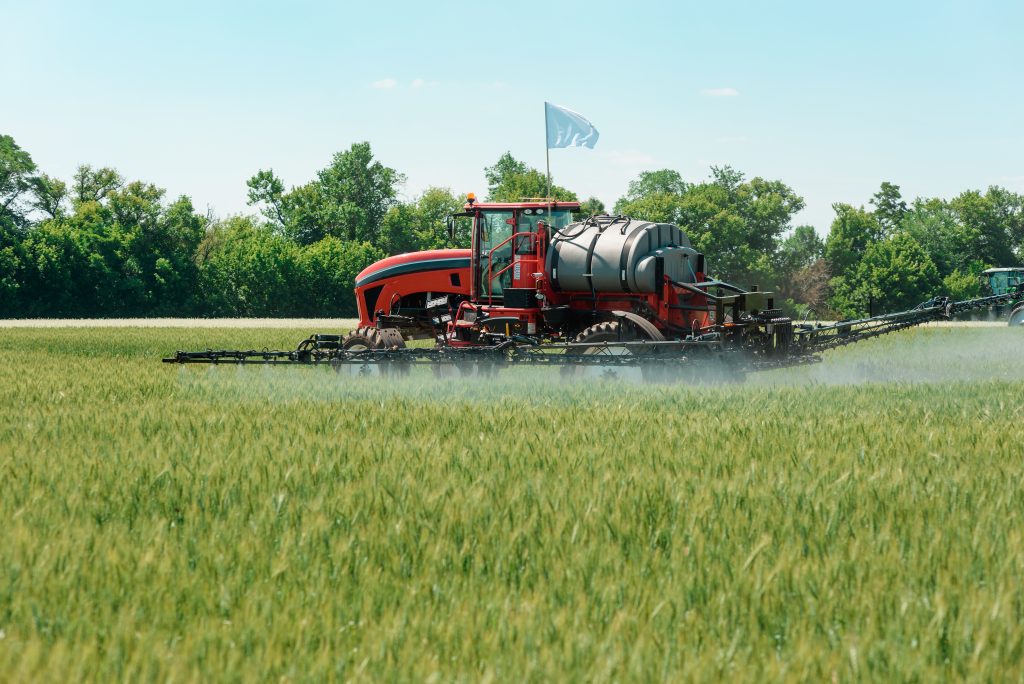
sprayer in crop of wheat

Chemical Withdrawal Times

When farmers are planning on using a crop to produce grain, whether for human or livestock consumption, they use different pesticides than they would if they planned for livestock to graze the crop standing. Each product has a label that indicates restrictions, warnings, and guidance on using crops for livestock feed. Reading and following the label will prevent any harm to livestock when salvaging these crops, and also prevent any chemical residues from ending up in carcasses.

Every product is different in terms of its restrictions for livestock feed, but a couple examples of guidelines you might encounter are:

For more tips on following chemical withdrawal times, check out our Salvaged Feed Fact Sheet:

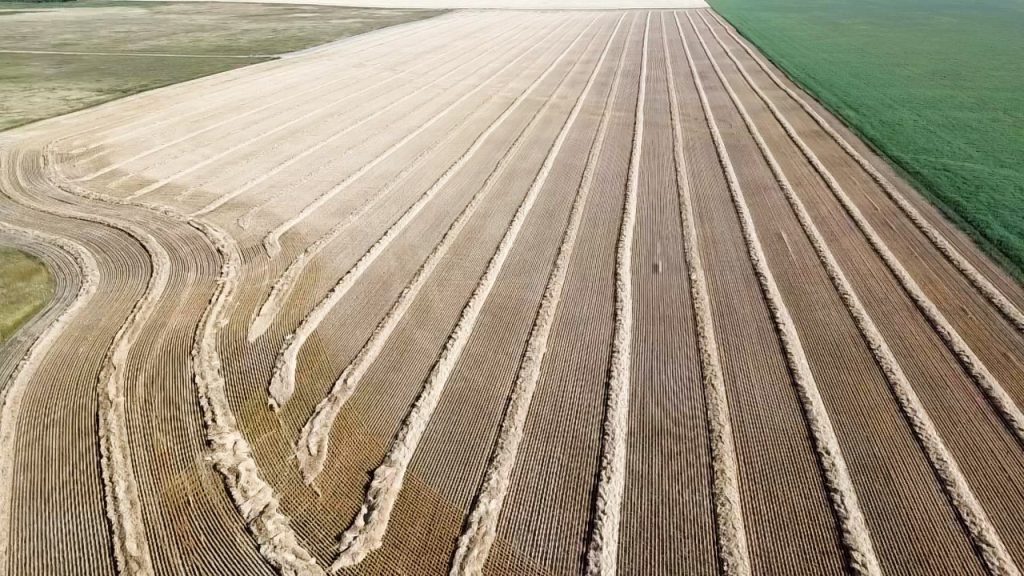
aerial view of swaths

Feed Testing

If a crop is up for salvage, it’s probably been damaged in some way, which also has impacts on the nutritional composition of the crop. Feed testing is important to make sure that the nutrients (energy, protein, etc.) in the crop can be fit into a whole ration to get cattle what they need, but also to make sure there’s nothing potentially concerning in the feed.

A common concern in salvaged feed during a drought is high levels of nitrates and sulphates. While not necessarily toxic on their own, high nitrate or sulphate levels in feed can compound higher levels in other feed ingredients or even water. Feed testing lets you understand what you’re working with so that you can work in salvaged feed without causing unintended harm.

For more tips on alternative feed sources and testing feed, check out the Beef Cattle Research Council’s Alternative Feeds page:

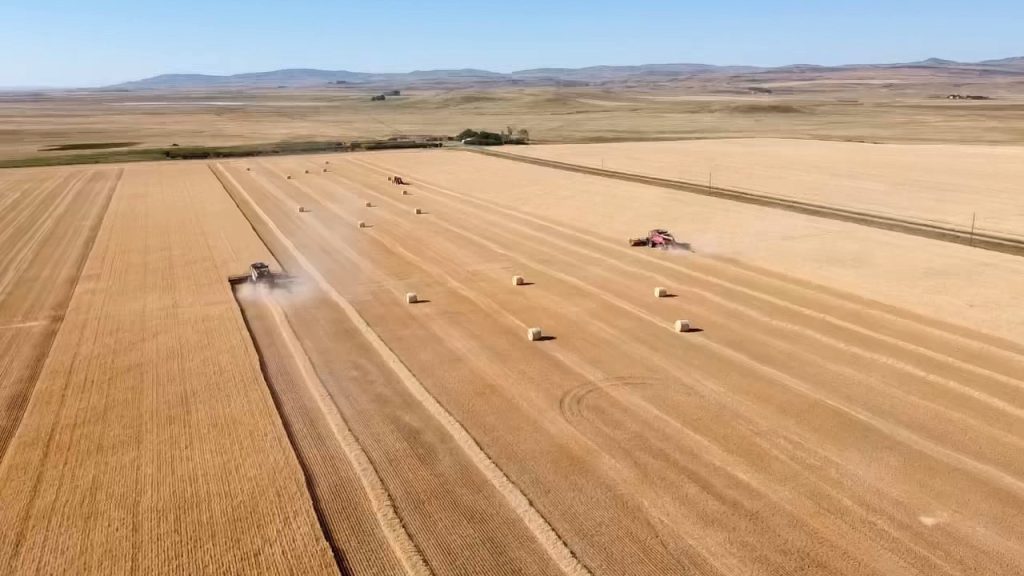
aerial shot of combining and hay bales

Setting a Price

For a mixed farm, it’s easy enough to take a salvaged crop from one enterprise and feed it to livestock in another. But what about grain farmers who might be looking for a neighbour with cattle that could use some feed?

It can be hard to figure out how to put a price on salvaged feed – after all, it’s not a typical avenue for marketing, hence the term salvage! Luckily, the Beef Cattle Research Council has a calculator to help put a value on salvaged crops:

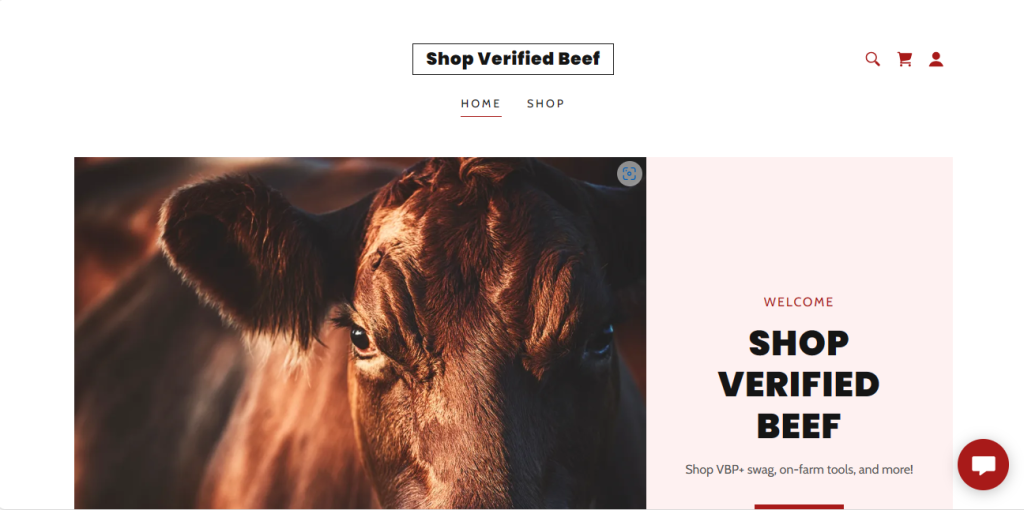
VBP+ is excited to announce the launch of Shop Verified Beef – a web store for the Canadian beef producer! 

Our team is committed to offering value to producers, and we’ve come up with a suite of items that we feel will do just that.

The web store will offer items in two main categories:

VBP+ roping gloves, toque and cap

VBP+ Swag items are wearables or usable items that let producers rep the VBP+ brand! Swag items are priced according to the cost to ship the item.

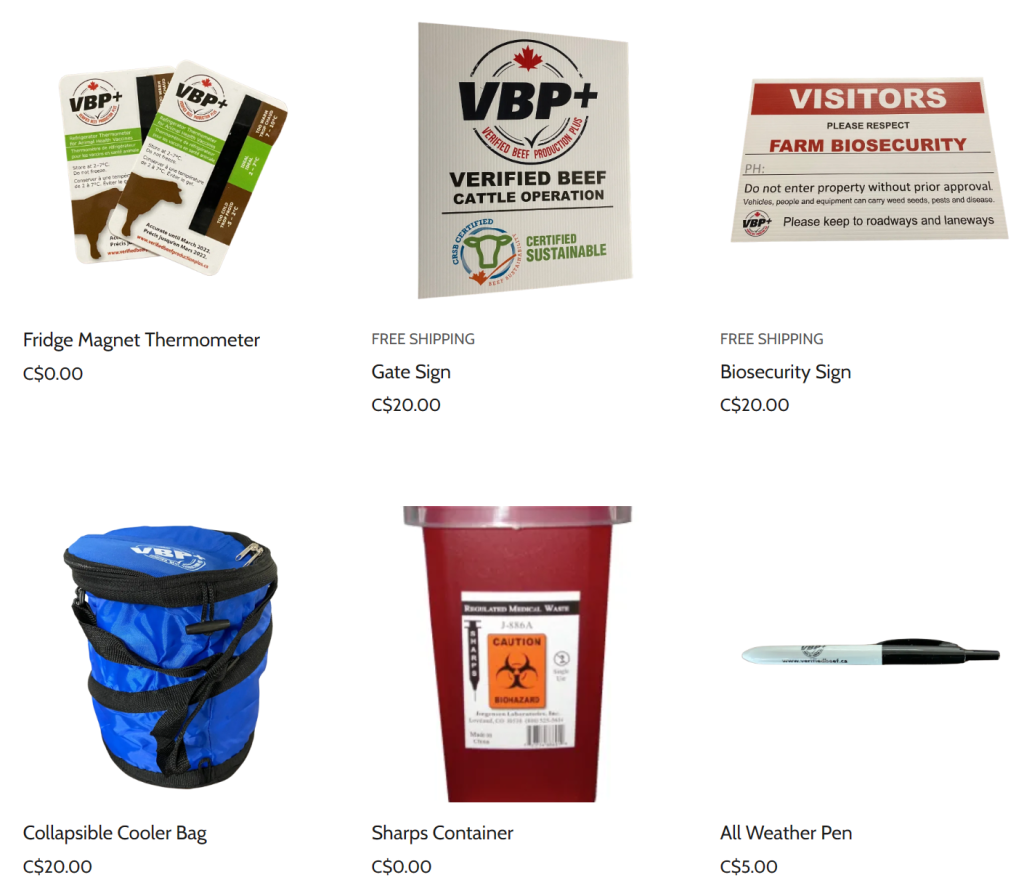
VBP+ biosecurity sign, gate sign, magnet thermometer, cooler bag, sharps container, all weather pen

Tools for the Farm includes items that are useful for beef producers, whether certified or not. This includes items like sharps containers and cooler bags that help producers use animal health products safely and effectively, but also includes signage like farm biosecurity signs or additional Certified Operation signs for producers with multiple sites. 

Tools for the Farm are also priced according to shipping, but many of the small items are free of charge to allow producers easy access to tools that can help them out, particularly if they are involved in the VBP+ program.

pocket calving record book from VBP+ and BCRC

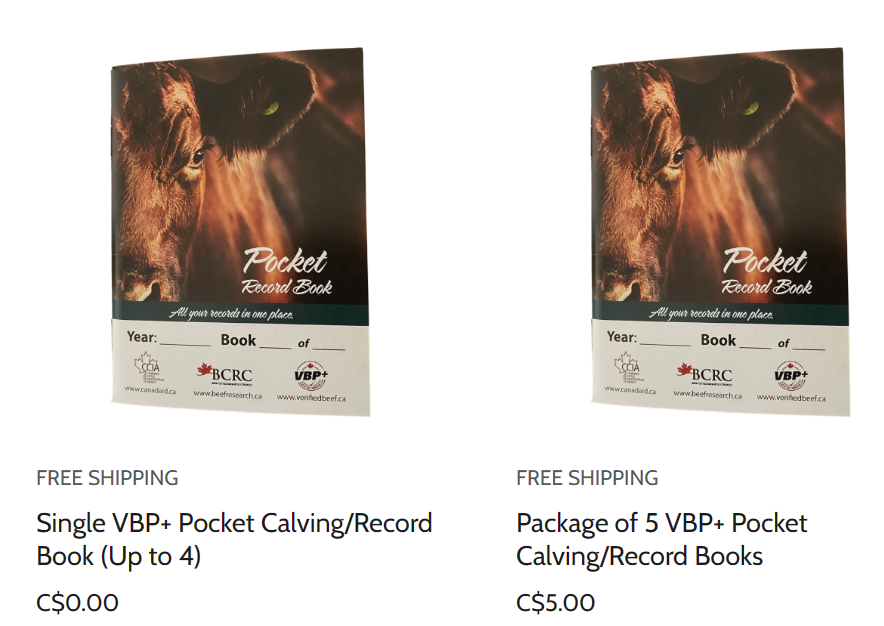
Under the Tools for the Farm category, you’ll also find access to order the VBP+ Pocket Calving/Record Book! If you’re looking to order 1-4 books, you can place an order free of charge using the option pictured above on the left. For larger quantities, you can order books in packages of 5 to cover shipping costs of larger numbers.

We’re always looking for new ideas for items that would be of use to Canadian beef producers. Items in the works for the future include:

  • Printed VBP+ resources, like record templates and manuals
  • Cowboy briefcases (hold animal health materials on a fence board)
  • Treatment thermometers
  • And more…
Got suggestions for new items? Drop your ideas in the message box below!

The fall run is not just a busy time of year for auction marts. For cow-calf and feedlot producers, fall is a mad dash of buying and selling. At times like this, it becomes hard to remember some key points related to food safety and animal care that become relevant when shipping calves or other cattle. Luckily, this problem can be easily solved with the help of a shipping record.

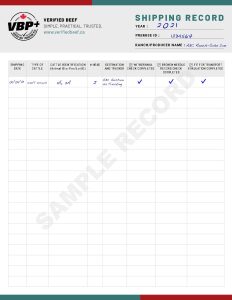
The VBP+ Shipping Record template is a single checklist that producers can go through when preparing a load of cattle for shipment. By filling out the document completely, producers can rest assured that they have done their part in ensuring high-quality animal care and food safety. Transportation and entry into the food chain are the points where consumers who are not connected to agriculture have the greatest chance to observe what producers do. So, it is important to make sure that what the public sees is Canadian beef producers’ commitment to these principles.

The top of the shipping record includes three important pieces of information. The year helps producers keep shipping records organized over time. Since the document has several rows, most producers can use only one or two of these sheets per year by recording all of their loads on one document. The premise ID is important for traceability purposes. In the event that an issue is discovered with an animal later on in the food chain, the Canadian Food Inspection Agency can use this record to trace the issue back to the premises of origin and prevent further hazards from entering the food chain. Finally, while the ranch/producer name might seem obvious to the recorder, this identification helps make this document useful proof of attention to the checks included in the record.

The next three columns help the producer associate the checks contained in the record with specific animals from their herd. The type of cattle column allows the producer to indicate the general class of cattle being shipped. This column is useful for quick reference when looking back on the record. For example, writing “weaned calves” in this column would help the producer remember that they had completed the shipping record when shipping their calves in the fall after weaning.

Similarly, the cattle identification column lets a producer narrow down which cattle they are referring to in the record. This specificity is important because it ensures that the three important checks in the last columns of the record are actually associated with the cattle being shipped. This identification can apply to single animals in the case of small loads or refer to groups of cattle using the producer’s own identification systems. The number of head allows for verification that the number of cattle that end up on the truck matches the number of cattle which were confirmed for safe shipment using the shipping record.

Recording the destination and trucker further aids in traceability in case an issue arises down the line. This column adds another pin on the map of where cattle move in their lifetime, helping officials track down the source of a problem should one come up. The trucker information is important for this same reason, as well as to have a record of the verification of a safe shipment before transferring care of the livestock from producer to trucker.

The final three columns are the “meat and potatoes” of the shipping record. These columns provide proof that a producer has done their due diligence in three key areas of responsible production. Firstly, indicating withdrawal check completed with a check mark shows that the producer has reviewed other records to confirm that the cattle in the shipment are not in a withdrawal period for an animal health product. While checking treatment records for the animals in the shipment is an obvious step, it is also important to think of other records linked to withdrawals, such as documentation of herbicide or pesticide usage. If animals grazed on pasture with a particular chemical, they may be subject to withdrawal for this reason as well. For cow-calf producers, it is important to note that animals may be shipped to a feedlot while still on withdrawal provided that their withdrawal information is sent to the feedlot operator along with them. This step will allow the feedlot operator to assume responsibility for ensuring that residues will not end up in carcasses.

The broken needle record check column is similar to the previous column in that it directs the producer to refer to a different document. The producer checks this box to indicate that they have reviewed records of broken needle occurrences on farm and confirmed that none of the animals in the shipment were involved in a broken needle incident. If cattle have broken needles, they should be retained for own consumption and the processor can be made aware of the location of the broken needle.

The final column verifies the fit for transport evaluation. This section requires the producer to observe the cattle in the shipment to verify that each individual can be safely transported without risk to animal welfare. In short, an animal is fit for transport if it can be expected to arrive at its destination in good condition. Lameness, injuries, and disease are all factors that can classify animals as either compromised, requiring transport with special provisions, or unfit for transport. Animals that are unfit for transport cannot be transported unless for veterinary diagnosis or care. The National Farm Animal Care Council (NFACC) Code of Practice for the Care and Handling of Beef Cattle contains a decision tree to help producers distinguish between these classes. This resource is also available within the Vulnerable, Distressed, and High-Risk Cattle section of the VBP+ Producer Reference Manual.

Shipping records are one of the key critical control points for producers to attend to in protecting food safety and animal care standards. This sample record, as well as a blank template for producer use, can be found under the Producer Resources section of our website.

cattle at feed bunk

Change is inevitable. But when beef operations make big adjustments, management changes as well. Keeping VBP+ up to date on your operation is key to staying current with the program.

While an audit is a great assessment of an operation, it can only capture a snapshot of the operation in time. Record assessments and self-declarations provide regular points for VBP+ to check in with producers and see what has changed, making sure everything is still on the right track.

It is important to remember that the VBP+ is a five-year audit cycle. The on-farm audit is an important first assessment, but the records assessments and self-declarations are in themselves annual assessments as well as important points to update information. Five years is a long time, it is very possible producers are making operational decisions that make sense during those five years.

Sometimes beef producers make big changes that have equally big impacts on management practices. VBP+ needs your help to know when those changes are made so we can continue to help you be as efficient, accurate, and sustainable as you can be.

One of the biggest changes an operation can make is adding or removing enterprises. As producers know, managing a cow-calf operation is drastically different than a feedlot. Deciding to background or finish your own calves adds additional complexity to your operation, particularly the aspects of management that are highlighted in the VBP+ standard.

Changing enterprises also means changing audit level. The table below outlines the three types of audit that VBP+ offers, which are defined by the production phases that the operation is involved in.

The three audit levels defined by VBP+ differ by production phase, affecting price
The three audit levels defined by VBP+ differ by production phase, affecting price.

With more production phases involved in an operation, more time is required by auditors and staff to review records, management practices, and documentation. Therefore, the annual cost of an audit is higher for a more complex audit level. However, by offering a combined audit at a slightly higher cost, the producer does not have to perform the same paperwork, audit, and other tasks for each enterprise they are involved in.

An ideal time to inform the renewals team of a change is when submitting the annual information update. However, if a major change is occurring outside the time frame of your annual renewal event, notifying the VBP+ renewals team as early as possible is the best practice. Ideally, a producer will reach out before a change actually occurs. Advance notice will let the VBP+ team reflect these changes to both maximize potential qualification and minimize disruption to any incentive programming as soon as possible. For renewals team contact information, go to the Staff Contacts page on our website and scroll down to VBP+ Delivery Services Inc.

Whether informing the renewals team of a change before or after it occurs, producers should provide a brief summary of what the change is. Key details could include major changes in the number of head managed, added or removed enterprises, and additional facilities. After this initial conversation, the renewals team will send the producer an operation change form to gather more details that will inform the next steps.

The required actions following a major change on a certified operation are handled on a case-by-case basis. For example, a producer deciding to finish their own calves using the same facilities and staff will require different actions than a producer purchasing a new facility, designing a new management system, and hiring new staff to finish their own calves. Follow-up actions can range from an enhanced record assessment, a trigger of an on-farm audit, and a brand-new certification starting a new five-year audit cycle.

Above all, VBP+ wants to help producers take advantage of the benefits to certification. Keeping the renewals team up to date on major changes to your operation will ensure that they can keep you accurate and current on your certification status, maintaining your access to program benefits.

VBP+ has been working on some new resources to help make it easier for producers to prepare for certification. The Self-Assessment Field Guide and two new online courses guide a producer though the VBP+ audit criteria to help ensure success.

self-assessment-field-guide-cover

The Self-Assessment Field Guide is a document that is intended to be taken out onto an operation to help a producer understand how they are performing in the areas of assessment for an audit. The guide lists each area assessed during an audit, with the scoring descriptors for each topic.

The minimum score is highlighted on each question as either a VBP+ Standard or VBP+ Required item. VBP+ Standard items have a minimum score of 1, requiring an understanding and awareness of the area. VBP+ Required questions have a minimum score of 2 and are considered Critical Control Points, meaning records will be requested.

In each scoring table, there is a blank column for a producer to check off their own assessment of how they are performing. Once the producer has gone through the guide, they can review their responses and decide where they might need to make changes or review the VBP+ 2.0 training before scheduling an audit.

The Self-Assessment Field Guide is available on our website on the Producer Reference Manual page.

Going hand in hand with the field guide, VBP+ has created an online Pre-Certification Self-Assessment course through the Canadian Cattle Learning Center. This course offers the same list of required areas and their corresponding scoring, but in a convenient online format that delivers a producer with a summary of their results.

Finally, the VBP+ Certification Process online course is a quick online module on the Canadian Cattle Learning Center that goes over all the steps that a producer must go through to get certified. This is a great resource for producers who are still considering the program and want to know what they are signing up for, or for producers who have started the process and need direction for next steps.

cclc-dashboard-screenshot

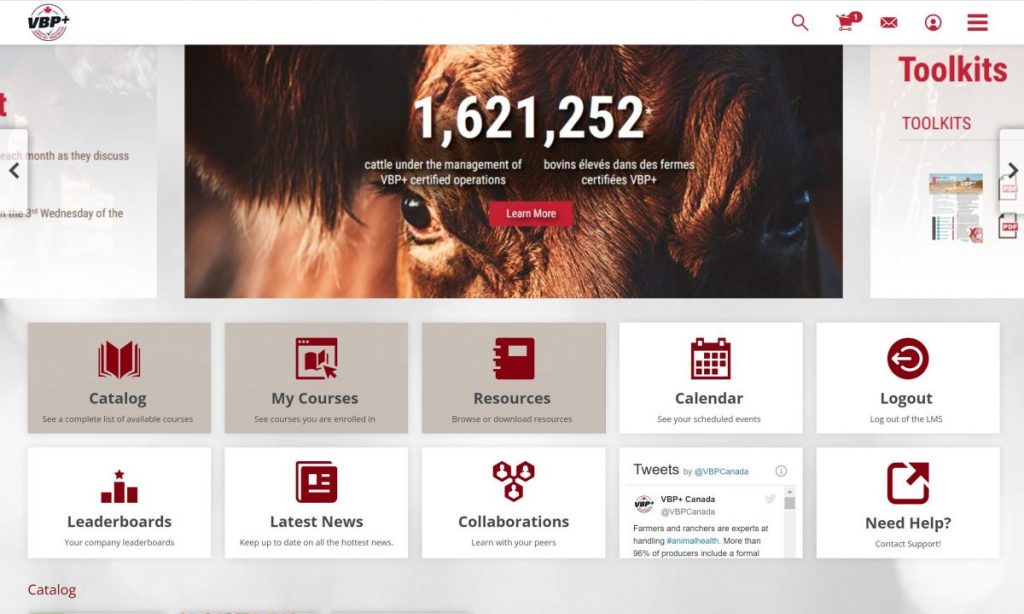
Both the Pre-Certification Self-Assessment and the Certification Process courses, as well as other VPB+ training material, can be accessed by creating a free account in the Canadian Cattle Learning Center. From the Dashboard, scroll down to Featured Courses to find the Pre-Certification Self-Assessment. These two courses are offered at no cost.  

All of these resources will be available in French. For more VBP+ resources, explore our website and stay tuned to the VBP+ blog and social media!

One of the exciting new elements of the Canadian Cattle Learning Centre is the redesigned online VBP+ training modules. However, this new platform isn’t just for new members of the VBP+ program.

Most obviously, training evolves with the changing Canadian beef industry. Certified producers who enroll in the Canadian Cattle Learning Centre can review the new VBP+ training modules to see what has been updated to reflect changes since they took the training. Additionally, operations that seek out additional training outside of the VBP+ program can upload these experiences to their transcript to demonstrate commitment to continuous improvement.

In addition, no one’s memory is perfect! An enrolment fee of $50 secures access to the Canadian Cattle Learning Centre for five years, letting producers come back to the training modules as much as they’d like to review concepts and program requirements. The new training also features self-assessments throughout to help producers track their progress towards meeting all standards. This tool can help certified producers reassess their operations to make sure they are still meeting requirements throughout the five-year audit cycle, particularly before records assessments and self declarations.

The Canadian Cattle Learning Centre is far from complete. In the future, VBP+ will continue to develop and add new training opportunities to the platform, providing centralized access to a variety of learning. A module focusing on the pre-certification process to help prepare new producers and operations seeking re-certification is currently in the works.

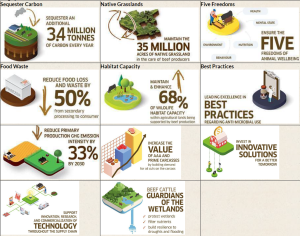
Most importantly, the Canadian Cattle Learning Centre has relevance in the big picture of the Canadian beef industry. The Canadian Beef Advisors released a set of nationally framed goals for the industry, which focus on securing environmental, social, and economic security into the future. Many of these goals are targeted at maintaining public trust in the Canadian beef industry.

VBP+ producers already demonstrate commitment to sustainable beef production by meeting program requirements. However, industry advocates need a way to show tangible evidence of the good work of Canadian beef producers to policymakers, consumers, and other stakeholders. Training rates on the Canadian Cattle Learning Centre, as well as producer transcripts, will provide simple metrics to communicate the dedication of Canadian beef producers to continuous improvement as the industry evolves in response to consumer demands.

In general, the Canadian Cattle Learning Centre is a win-win-win situation. Producers gain an easy to access, engaging platform for training and a simple way to track their industry-related education. Industry advocates acquire a simple method for communicating the good work that Canadian farmers and ranchers are already doing. Finally, other stakeholders outside of the industry, including consumers, gain confidence in the safety and sustainability of the Canadian beef on their plates.

To register for the Canadian Cattle Learning Centre, click here.

To learn more about the Canadian Cattle Learning Centre and how to sign up, see the last VBP+ blog post.

Canadian beef producers are always keen to make their operations the best they can be. However, taking time away from the farm to seek out learning opportunities is rarely easy. Luckily, VBP+ has launched the Canadian Cattle Learning Centre to make it easy for ranchers to improve their operations from the comfort of their own homes.

The Canadian Cattle Learning Centre houses the brand new eleven online training modules for the VBP+ program. Producers can take the training at their own pace as they navigate through content which has been refreshed to be more engaging and relevant to the modern industry. The modules include graphics, animations, links to key resources, and interactive activities to make training more effective and more fun!

One of the key features of the new online training is the self-assessment tool. Throughout each module, trainees are presented with questions to reflect on how their operation is doing in relation to key VBP+ program requirements. While responses are not evaluated by auditors, producers can view and print their results to assess their progress towards meeting all requirements for a successful audit.

As well as the VBP+ training modules, producers can also upload other training that they have completed outside of the VBP+ program. The Canadian Cattle Learning Centre compiles these opportunities into a transcript, allowing producers to demonstrate their commitment to continuous improvement on their operations through education. In the future, VBP+ is looking to create additional content to provide more training opportunities directly through the Canadian Cattle Learning Centre.

How to Sign Up

To register for the Canadian Cattle Learning Centre, click here. Follow the sign-up process below:

  1. Hit Log In at the top right corner, then choose Sign Up at the bottom of the pop up menu.
  2. Enter your personal information and click Sign Up.
  3. Enroll in the course Subscription 2022 and pay the $50 enrolment fee for five years of access.
  4. Enroll in the VBP+ 2.0 course to take the online training.

To take the entire course one module at a time, please select the individual modules/lessons. While completing individual modules provides the complete training and includes self-assessments for each module, there is no self-assessment summary provided at the end of each module.

Need Help?

If you have questions about the Canadian Cattle Learning Centre or the new online training, please reach out to your provincial coordinator. These individuals are there to help guide you through the VBP+ program every step of the way and help you achieve success in training and/or certification.

To find the contact information for your provincial coordinator, click here.

The Animal Care section of the new VBP+ Producer Reference Manual is a great resource for producers to brush up on animal management techniques. Like the other sections, Animal Care includes self-assessments for certified operations to check their progress towards meeting the requirements for a successful audit. In addition, this section is packed full of great information on a variety of animal care topics, as well as other resources for producers.

Animal Care in the manual is divided into five parts: NFACC Code of PracticeHandlingProceduresHousing and Facilities, and Reproduction and Calving. Each sub-section contains key information for producers looking to get certified, or who want to learn more about these topics.


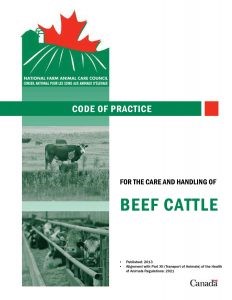
The NFACC Code of Practice outlines recommended and required practices for Canadian beef producers. Read it here.

The first sub-section, NFACC Code of Practice, helps producers interpret the structure of this important document. The National Farm Animal Care Council (NFACC) published the new Code of Practice for the Care and Handling of Beef Cattle in 2013. This document upholds the standard for beef cattle management in Canada, and was developed in partnership amongst producers, animal welfare groups, and other stakeholders. Check out the Animal Care section to better understand how to interpret the recommendations and required practices outlined in this document.

Next, the Handling sub-section discusses low-stress cattle handling and its benefits to producers and animals. Specifically, this part of the manual describes specific guidelines for handling tools and principles for animal movement. Additionally, this section ties into the NFACC Code of Practice by providing producers with the recommended handling practices from this document.

Procedures helps producers understand specific guidelines for a variety of common on-farm techniques, including restraint, branding, disbudding/dehorning, castration, weaning, predator control, and tail docking. These components help producers best accomplish these tasks while balancing animal welfare, practicality, efficiency, and effectiveness. For producers new to VBP+ or who want to clarify best practices, this part of the Animal Care section is key. As a bonus, links to several helpful resources from the Beef Cattle Research Council are provided.

The Housing and Facilities sub-section describes how to best manage animal care outside, in confinement, and with specific facilities. This part of the manual lays out key considerations in each of these scenarios and helps producers improve the environment their cattle are exposed to in order to maximize animal health, welfare, and performance.

Finally, Reproduction and Calving Management discusses facilities, monitoring, colostrum, calving issues, and prevention of undesired pregnancies. These topics combined allow producers to improve their calving practices so as to maximize success in terms of calf survival. NFACC guidelines are also provided throughout to help producers note key points from this document.

Together, the sub-sections of Animal Care help producers enhance their cattle management to improve animal health and welfare, which in turn improves performance and profitability for VBP+ operations. Stay tuned for the next section of the VBP+ Producer Reference Manual!