SIMPLE.

PRACTICAL.

TRUSTED.

VBP+ BLOG & NEWS

November
Sustainability, Safety and Success through Verified Beef Training

This article was first published in the Fall 2025 issue (Vol. 2 No.3) of SaskCattle Times, and is reprinted on the VBP+ Blog with the publisher’s permission. To access the full digital issue of SaskCattle Times Magazine, click here.
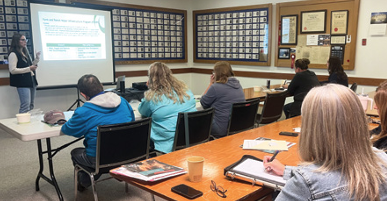
Verified Beef Production Plus producer training, photo courtesy SaskCattle Times


In today’s competitive beef industry, maintaining high standards of quality, safety, and sustainability are more important than ever. For beef producers, taking the Verified Beef Training offers numerous benefits that can significantly enhance business operations and consumer confidence.

“Taking the time to complete the VBP+ training not only opens up SCAP funding for producers but it shows that they are willing to learn more about what best management practises they can implement to prove to consumers the food we produce is sustainable and safe,” said Joleen Shea, Vice Chair of the Saskatchewan Verified Beef Board and rancher from Kindersley.

This training not only equips producers with essential knowledge and skills but also demonstrates a commitment to excellence that resonates across the supply chain. One of the primary benefits of Verified Beef Training is the emphasis on food safety.

While we are all ranching and farming because we probably love working with animals and being outdoors, the training emphasizes that at the end of the day we are producing food for people to eat and our actions on-farm can have consequences on the end product. Emphasis on records keeping ensures everyone involved on the operation knows which animals have been treated and what the treatment dates and withdrawal dates are.

Tracy Hebert, Knowledge Mobilization and Communications Director with the Beef Cattle Research Council explains that the “VBP+ training helps producers and their employees minimize risk and provides opportunity for adopting beneficial practices and innovations.” The training delivers practical information, ideas, and tools that help producers strengthen their operations. It emphasizes better record-keeping practices to prevent problems such as double treatments, while also ensuring that if an operation is ever questioned, detailed records can demonstrate due diligence.

Producers also gain proper guidance on vaccine handling and injection techniques so the time and expense invested in herd health lead to the results they expect. By formalizing best practices, the training further enhances operational efficiency and supports long-term success.

The training provides producers with practical information, ideas, and tools that strengthen day-to-day operations. It encourages accurate record-keeping to prevent issues like double treatments and ensures that, if questions ever arise, detailed records demonstrate due diligence. Participants also learn proper vaccine handling and injection techniques so that the time and money invested in herd health achieve the intended results. In addition, by formalizing best practices, the training helps producers improve efficiency across their operations.

The training also strengthens the industry’s reputation and reassures customers about the high quality of Canadian cattle and beef. It does this by providing guidance on reducing disease, minimizing carcass defects, and promoting best practices in areas of public concern such as painful procedures, livestock transportation, and grassland management.

Producers who complete the VBP+ training demonstrate that they are proactive in caring for animals, the land, and the food supply chain. It provides producers confidence that plans are in place for emergency  response, and that practices done on farm are in line with national standards.”

“At times the industry is focused on reporting only how many operations are VBP+ Certified (completed the on farm assessment), but I think the bigger story is how many people and operations the VBP+ program is impacting by completing the training,” explained Karla Hicks, Chair of Saskatchewan Verified Beef Production Board and rancher from Mortlach.

“The training provides new and different ideas that you can implement on your operation like adding additional information to your treatment records, having protocol around needle disposal, vaccine storage and correct temperatures that don’t include the dashboard of the truck! Biosecurity is another big topic that is covered in the training. It is not meant to tell people how to manage their operation, but provide awareness of areas to improve upon to prevent a disease outbreak.

“For example, if you invite a neighbour or client to come and walk through a pen of calves or tour your cow herd, the biosecurity component of the training will help you think a little differently about the visit and provide practical suggestions on how you can still tour your cattle, but simultaneously having protocol in place to prevent a disease outbreak. These practices aren’t meant to complicate anyone’s operation, only enhance what you are already doing. The training component of VBP+ is invaluable and I don’t think we give enough weight to the outreach and impact it’s having.”

If you are interested in taking the training, it is available online anytime at www.verifiedbeef.ca, or you can contact your local VBP+ coordinator to set up an in-person training workshop in your area.
Understanding the VBP+ On-Farm Assessment

This article was first published in Volume 5 Issue 2 of ABP Magazine (May 2025), and is reprinted on the VBP+ Blog with the publisher’s permission. To access the full digital issue of ABP Magazine, click here.

When a producer decides to get certified with the Verified Beef Production Plus (VBP+) Program, they go through an on-farm assessment to confirm that they are meeting the requirements of the VBP+ standard. This process can sound intimidating but is really designed to help producers succeed and make the most of their certification.

What is the VBP+ on-farm assessment?

The on-farm assessment (previously known as audit) consists of a visit to the farm by a third-party assessor. When an assessor comes to the farm, they will walk through the key areas of the farm with you, including cattle pens, processing areas, feed and medication storage, and calving facilities. The assessor will also look over the key records that producers keep as part of the VBP+ program, making sure that they include all of the required components for the program.

The assessment is meant to feel conversational. Assessors are there to understand how your operation works and listen to the expert on your farm—you!

“For many producers, the VBP+ on-farm assessment feels like touring a neighbour through the farm,” says Shannon Argent, VBP+ business manager and a VBP+ Certified producer. “The process is designed to celebrate all of the successful practices and tools producers have implemented and identify areas where risks could be reduced.”

Dan Skeels of Anchor D Simmentals & Charolais completed an on-farm assessment last fall. “Our assessor was very complimentary about what we do,” says Dan. “He was great and really helpful.”

When an assessor is assigned to your farm, they will reach out to you to arrange a time for the assessment that works for you. They will also confirm any biosecurity protocols that you may have for visitors coming to your operation to make sure they are respecting the way your operation runs.

What happens after an on-farm assessment?

After the assessor visits the farm, they will complete a report of their findings. The results of the report are kept between the VBP+ program and the producer, and are intended to help the producer identify the areas they are excelling in and places they may want to dive further into to improve.

“The on-farm assessment is not a pass or fail evaluation,” says Shannon. “If an assessor identifies an area where the operation is not meeting a requirement of the VBP+ standard, they will issue what is called a corrective action request (CAR). The assessor will explain the areas where a producer may need to adjust their record-keeping or practices to meet the program requirements, and the producer will be given time to implement those changes.”

After the assessor visits the farm, they will complete a report of their findings. The results of the report are kept between the VBP+ program and the producer, and are intended to help the producer identify the areas they are excelling in and places they may want to dive further into to improve.

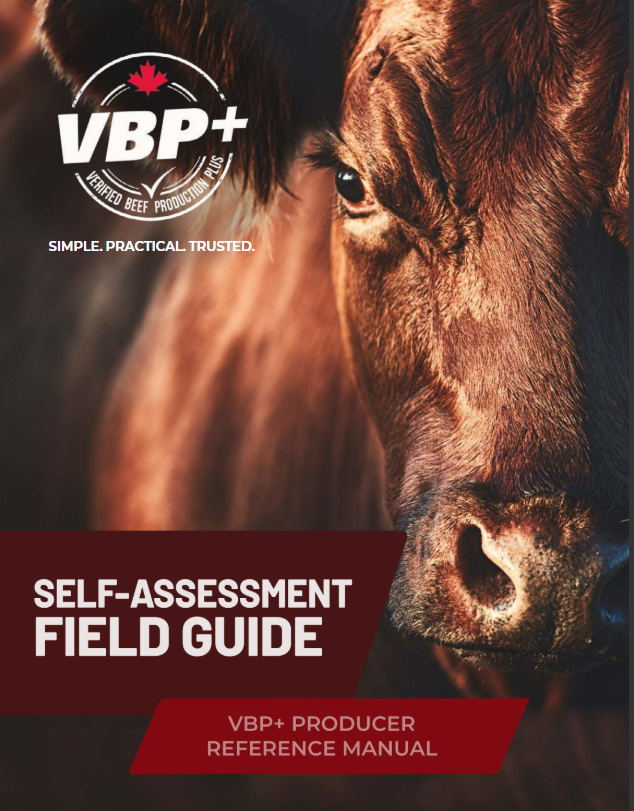
Learn more about the assessment in the VBP+ Producer Reference Manual Self-Assessment Field Guide.

“The on-farm assessment is not a pass or fail evaluation,” says Shannon. “If an assessor identifies an area where the operation is not meeting a requirement of the VBP+ standard, they will issue what is called a corrective action request (CAR). The assessor will explain the areas where a producer may need to adjust their record-keeping or practices to meet the program requirements, and the producer will be given time to implement those changes.”

The program is not designed to be prescriptive and allows producers to design their own processes and management practices to meet the program. A good example of this approach is treatment records. While VBP+ offers templates that include all of the required information, producers are not required to use these templates. If your notebook, spreadsheet, iPhone, or herd management software are working well for you, there is no need to reinvent the wheel. The assessor will work to understand your systems, not impose one upon you.

“The program to us is common sense,” says Dan. “If you’re new to the program, I would say there’s no need to overthink it. It’s probably what you practice everyday. It’s important that our industry is transparent and that we are able to show people what we do everyday for a living.”

Who are the assessors?

The assessor assigned to your operation is there to help you succeed. While they cannot provide coaching or help you implement the VBP+ standard, they are more than willing to answer questions about the requirements of the program. Assessor Deborah Armstrong and her husband were among the first group of ranchers certified with the Verified Beef Program on their cow/calf operation. “I commend the fact that the VBP+ program is built by producers for producers,” says Deborah. “Assessors, as ranchers themselves, have a sound knowledge of the industry and understand the practical aspects of everyday ranching. For me, being an assessor is an important way to recognize the hard work and commitment of producers.”

“Many of our on-farm assessors are producers themselves,” says Shannon. “They are there to help fellow producers and their operations succeed.”

How do I get certified?

Producers who are interested in completing an on-farm assessment to pursue VBP+ Certification can contact VBP+ Delivery Services Inc. to submit an application. Find contact information and more details on the certification process on verifiedbeef.ca under the Certification tab.

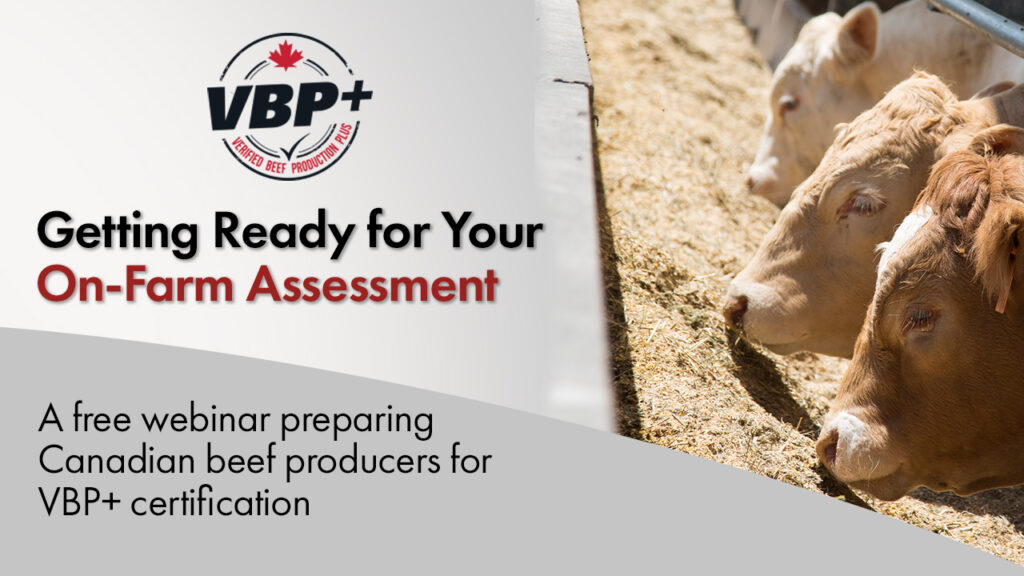
Attend the Free VBP+ Webinar: Getting Ready for Your On-Farm Assessment
VBP+ pre-certification webinar: Getting Ready for Your On-Farm Assessment

Whether you’re pursuing your first VBP+ or CRSB certification or preparing for renewal, this webinar is for you! 

Registration is now open for the Verified Beef Production Plus (VBP+) “Getting Ready for Your On-Farm Assessment” webinar. After participating in this webinar, the on-farm assessment will be more efficient, taking less time and with greater ease as you will be well-prepared for assessment questions.   

This webinar will dig into the assessment process and the records required for assessment. With the understanding that every operation is different and utilizes unique systems and processes, this webinar provides the opportunity to address specific questions related to your operation.  

What You Can Expect from This Webinar

This webinar is being offered on two separate nights to accommodate producers across Canada in differing time zones. The webinar presentation will be the same on each night.  

Choose the session that works best for you! 

Eastern Time Zone: 

Monday, December 1, 7:00 pm Eastern Time  

4:00 pm BC | 5:00 pm AB | 6:00 pm SK & MB

7:00 pm ON & QC | 8:00 pm NS, NB & PEI 

Western Time Zone: 

 Tuesday, December 2, 7:00 pm Mountain Time 

6:00 pm BC | 7:00 pm AB | 8:00 pm SK & MB

9:00 pm ON & QC | 10:00 pm NS, NB & PEI 

Pre-Certification Tips to Help You Prepare

Producers who participate in a pre-certification consultation prior to the VBP+ on-farm assessment are consistently better prepared. The purpose of this webinar is to provide this pre-consultation in an easy-to-access format with flexibility to meet your schedule.  

Live Questions & Answers with VBP+ Staff

This webinar will provide a live Q&A session, providing you with the opportunity to ask questions specific to your own operation and with specific reference to any area of the on-farm assessment you may be unsure about. This webinar is ideal for producers who are considering certification or have submitted their application and are awaiting assessment! 

Can’t make the live session? No problem—all registrants will receive the recording.