SIMPLE.

PRACTICAL.

TRUSTED.

VBP+ BLOG & NEWS

2023
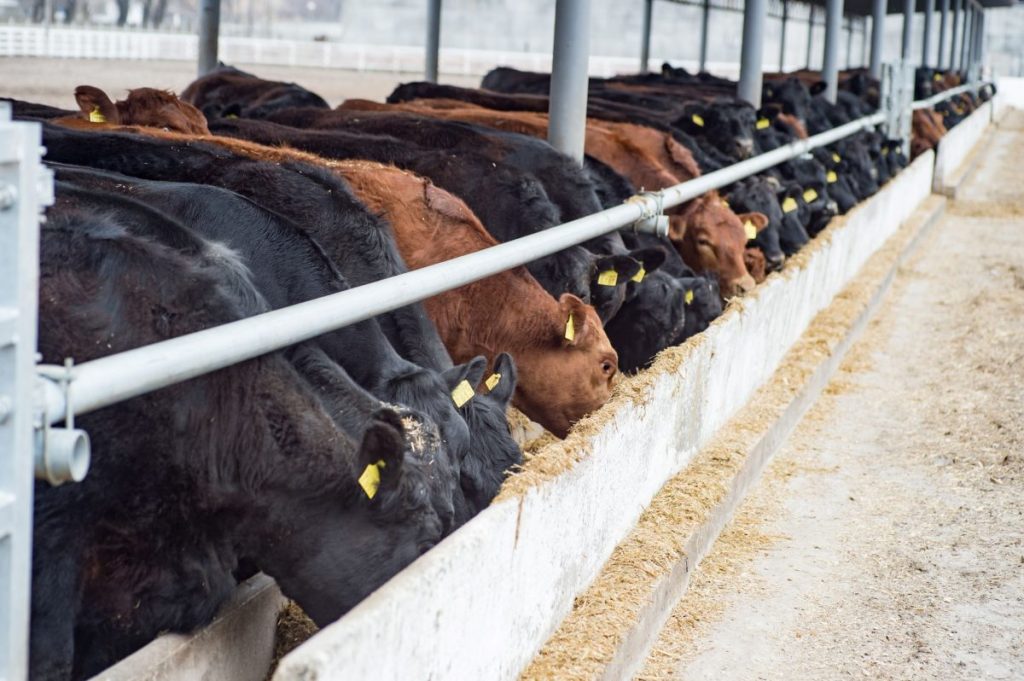
cattle at feed bunk

Change is inevitable. But when beef operations make big adjustments, management changes as well. Keeping VBP+ up to date on your operation is key to staying current with the program.

While an audit is a great assessment of an operation, it can only capture a snapshot of the operation in time. Record assessments and self-declarations provide regular points for VBP+ to check in with producers and see what has changed, making sure everything is still on the right track.

It is important to remember that the VBP+ is a five-year audit cycle. The on-farm audit is an important first assessment, but the records assessments and self-declarations are in themselves annual assessments as well as important points to update information. Five years is a long time, it is very possible producers are making operational decisions that make sense during those five years.

Sometimes beef producers make big changes that have equally big impacts on management practices. VBP+ needs your help to know when those changes are made so we can continue to help you be as efficient, accurate, and sustainable as you can be.

One of the biggest changes an operation can make is adding or removing enterprises. As producers know, managing a cow-calf operation is drastically different than a feedlot. Deciding to background or finish your own calves adds additional complexity to your operation, particularly the aspects of management that are highlighted in the VBP+ standard.

Changing enterprises also means changing audit level. The table below outlines the three types of audit that VBP+ offers, which are defined by the production phases that the operation is involved in.

The three audit levels defined by VBP+ differ by production phase, affecting price
The three audit levels defined by VBP+ differ by production phase, affecting price.

With more production phases involved in an operation, more time is required by auditors and staff to review records, management practices, and documentation. Therefore, the annual cost of an audit is higher for a more complex audit level. However, by offering a combined audit at a slightly higher cost, the producer does not have to perform the same paperwork, audit, and other tasks for each enterprise they are involved in.

An ideal time to inform the renewals team of a change is when submitting the annual information update. However, if a major change is occurring outside the time frame of your annual renewal event, notifying the VBP+ renewals team as early as possible is the best practice. Ideally, a producer will reach out before a change actually occurs. Advance notice will let the VBP+ team reflect these changes to both maximize potential qualification and minimize disruption to any incentive programming as soon as possible. For renewals team contact information, go to the Staff Contacts page on our website and scroll down to VBP+ Delivery Services Inc.

Whether informing the renewals team of a change before or after it occurs, producers should provide a brief summary of what the change is. Key details could include major changes in the number of head managed, added or removed enterprises, and additional facilities. After this initial conversation, the renewals team will send the producer an operation change form to gather more details that will inform the next steps.

The required actions following a major change on a certified operation are handled on a case-by-case basis. For example, a producer deciding to finish their own calves using the same facilities and staff will require different actions than a producer purchasing a new facility, designing a new management system, and hiring new staff to finish their own calves. Follow-up actions can range from an enhanced record assessment, a trigger of an on-farm audit, and a brand-new certification starting a new five-year audit cycle.

Above all, VBP+ wants to help producers take advantage of the benefits to certification. Keeping the renewals team up to date on major changes to your operation will ensure that they can keep you accurate and current on your certification status, maintaining your access to program benefits.

VBP+ has been working on some new resources to help make it easier for producers to prepare for certification. The Self-Assessment Field Guide and two new online courses guide a producer though the VBP+ audit criteria to help ensure success.

self-assessment-field-guide-cover

The Self-Assessment Field Guide is a document that is intended to be taken out onto an operation to help a producer understand how they are performing in the areas of assessment for an audit. The guide lists each area assessed during an audit, with the scoring descriptors for each topic.

The minimum score is highlighted on each question as either a VBP+ Standard or VBP+ Required item. VBP+ Standard items have a minimum score of 1, requiring an understanding and awareness of the area. VBP+ Required questions have a minimum score of 2 and are considered Critical Control Points, meaning records will be requested.

In each scoring table, there is a blank column for a producer to check off their own assessment of how they are performing. Once the producer has gone through the guide, they can review their responses and decide where they might need to make changes or review the VBP+ 2.0 training before scheduling an audit.

The Self-Assessment Field Guide is available on our website on the Producer Reference Manual page.

Going hand in hand with the field guide, VBP+ has created an online Pre-Certification Self-Assessment course through the Canadian Cattle Learning Center. This course offers the same list of required areas and their corresponding scoring, but in a convenient online format that delivers a producer with a summary of their results.

Finally, the VBP+ Certification Process online course is a quick online module on the Canadian Cattle Learning Center that goes over all the steps that a producer must go through to get certified. This is a great resource for producers who are still considering the program and want to know what they are signing up for, or for producers who have started the process and need direction for next steps.

cclc-dashboard-screenshot

Both the Pre-Certification Self-Assessment and the Certification Process courses, as well as other VPB+ training material, can be accessed by creating a free account in the Canadian Cattle Learning Center. From the Dashboard, scroll down to Featured Courses to find the Pre-Certification Self-Assessment. These two courses are offered at no cost.  

All of these resources will be available in French. For more VBP+ resources, explore our website and stay tuned to the VBP+ blog and social media!

certification process producers planning

Cargill and the Canadian Roundtable for Sustainable Beef (CRSB) have announced a pilot project offering up to $400 for producers maintaining CRSB certification from 2022 into 2023. Since VBP+ is a delivery agent for CRSB, VBP+ certified operations who agree to information sharing and provide their Canadian Livestock Tracking System (CLTS) information are automatically included in this program. If you have any questions about your opt-out status, please contact VBP+.

The intent of the Certification Recognition Credit program is to recognize producers who have made the investment of time and money to become certified with CRSB (VBP+ audited) but have not received at least $400 in credits for qualifying cattle processed at Cargill in 2022. For example, a producer who only received $60 in credit payments in 2022 would receive a payment of $340 under the new Certification Recognition Credit.

VBP+ is pleased that stakeholders have listened to concerns from certified producers and have taken steps to make sure that incentivization recognizes all producers investing in certification. It was supporting data from VBP+ producers around uneven incentivization that was integral to the creation of this program. We thank our VBP+ producers for remaining committed to certification and are pleased with this initiative from stakeholders!


“With this funding, we want to recognize the commitment of Canadian producers in ensuring the viability of this program and making Canadian beef even more sustainable,” said Jeffrey Fitzpatrick, Sustainability Program Lead, Cargill. “Only in supporting programs like the CRSB Certified Sustainable Beef Framework will we be able to more accurately create and sustain the highest standard of sustainability practices across the Canadian beef supply chain.”

This quote is from the CRSB press release on this program. Read the full release here.


Here is how the program will work according to different producer scenarios:

Financial Credits Received for Qualifying Cattle in 2022 Payment through Certification Recognition Credit
Producer received $0 in financial credits for qualifying cattle in 2022 Producer will receive $400
Producer received less than $400 in financial credits for qualifying cattle in 2022 Producer will receive a “top up” payment for the difference between their credit payments and $400 (for example, if you received $60 in 2022, you will receive $360)
Producer received $400 or more in financial credits for qualifying cattle in 2022 Producer will receive $0

Frequently Asked Questions

*Please note: Producers

When can I expect my payment?

March 2023

Do I need to apply for the credit?

There is no need to apply or take any extra steps to ensure you receive this credit. Cargill will work with CCIA, VBP+, OCFB and PBQ to verify eligibility and determine amounts, then distribute these rewards via the same channels as the Qualifying Cattle Credit. 

Do I have to have at least one animal processed at Cargill to be eligible? 

You do not need to have a minimum of animals processed at Cargill in order to be eligible. This Recognition Credit was established to recognize the upfront investment that many Canadian producers have made to become CRSB Certified, even when they aren’t guaranteed a clear, financial payback for that effort at this time. 

Cargill realizes producers do not always have full control over where their cattle are ultimately processed, and while the existing Qualifying Cattle Credit payment rewards producers whose qualifying cattle supply Cargill directly, this new Recognition Credit distinctly rewards the upfront investment instead. 

Is this an annual program? 

Cargill, the CRSB, and partners are committed to long-term recognition for operations who maintain their CRSB Certified status. This pilot will help inform what that future state could look like. The incentive may be structured differently in the future but, in principle, this recognition will remain in place in future years. 

Cargill will continue to thank producers for directly supplying Cargill with qualifying cattle via the Qualifying Cattle Credit. In fact, this credit payment will shift from quarterly to monthly in early 2023 based on the status of cattle processed the prior month. The pilot Recognition Credit is incremental to the ongoing financial recognition within our implementation of the program. 

Who do I contact for further questions about the program? 

For questions about the CRSB Certified Sustainable Beef Framework or this pilot Recognition Credit, contact Dayna Cameron at CRSB. 

For questions about Cargill’s existing Qualifying Cattle Credit payments, contact Emily Murray at Cargill or Jenn Taplin at CCIA (or J-S Roy at PBQ). 

For questions about getting or maintaining your CRSB Certification status, contact a representative of VBP+ with the information listed here. 

Last year, Farm Credit Canada (FCC) launched an initiative to recognize the efforts of producers certified with the Canadian Roundtable for Sustainable Beef (CRSB).  On May 2, 2023, applications for the program will reopen!

FCC will provide a payment to FCC customers who are CRSB certified through one of the CRSB’s certification bodies, including VBP+. So, VBP+ certified producers can take advantage of this opportunity.

“FCC is happy to be reopening applications for our sustainability programs. We are in a unique position to work with individual sectors in the agriculture and food industry on their sustainability goals,” explains Curtis Grainger, FCC’s director of sustainability programs. “The progress we’re seeing looks different depending on the sector and on an individual’s operation. That’s why the established, verified initiatives at CRSB and McCain Foods are important partnerships that allow us to support producers with their individual needs.”

Producers can receive up to $2,000, calculated as a portion of your lending with FCC, excluding operating credit. Producers can reapply annually.

“VBP+ appreciates FCC’s investment in certified producers through their Sustainability Incentive Program,” says Shannon Argent, VBP+ Business Manager. “Financially incentivizing producers who take the time and effort to participate in certification shows the commitment shared by both producers and stakeholders to advancing sustainability in the Canadian beef industry.”

If you are already certified, you can apply through the FCC page here. You will need to provide the following:

  • Contact information
  • FCC customer number
  • Certification body used (i.e. VBP+ if you are certified with us)
  • Copy of certificate

Note that you must be an FCC customer in good standing with an amount owing on current lending, and your CRSB certification must be current.

If you aren’t yet certified but want to join the program to be eligible, contact your VBP+ provincial coordinator using the info here to learn more. The provincial coordinator can set you up with an in-person training session or direct you to our online Canadian Cattle Learning Center to get started.

After training and pre-audit prep with a coordinator, contact VBP+ Delivery Services Inc. (the certification branch of VBP+). Find contact info here.

For an overview of the certification process and five-year audit cycle, click here.

mentorship in agriculture

Getting involved with certification programs and supply chains takes commitment from beef producers. The time, effort, and money required do not go unnoticed, and Verified Beef Production Plus (VBP+) is committed to advocating for producers to receive value back in return for their investment.

Producers can get involved with the VBP+ program in two ways. Getting trained allows producers to stay up to date on best management practices supported by current research, Canadian regulations, and modern experience from efficient and profitable ranches. For those seeking further involvement in the program, certification follows naturally.

To get certified with VBP+, producers gather six months of production records and make changes on their operation to match the requirements of the VBP+ Standard. A provincial coordinator will go through a pre-audit preparation process with each producer to ensure successful certification. Then, a third-party auditor, who is often a producer themselves, will come out to visit the farm to verify that required practices from the VBP+ standard are being implemented. Producers will not fail an audit if they do not meet all requirements. Instead, a corrective action request will be issued with a timeline for change to be made, encouraging continuous improvement.

Once a producer has successfully completed their audit, they are responsible for maintaining the management and record-keeping requirements of the VBP+ program. Each year, the operation must complete a renewal event to demonstrate continued adherence to the VBP+ Standard. In years two and four of the five-year audit cycle, producers submit records to be assessed according to the requirements of the program. In years three and five, producers self-declare that they are maintaining the Standard on their operation.

For many producers, getting involved in VBP+ training or certification has inherent benefits. Changing management practices often increases efficiency and can aid your bottom line. For example, making sure that animal health products like vaccines and antibiotics are delivered effectively can reduce time and money spent on treating sick cattle. Many VBP+ producers also report that record-keeping indirectly increases efficiency on their operation by keeping track of management decisions so that they can be changed in the future to optimize efficiency and profitability.

However, VBP+ training and certification clearly require a time commitment from the producer. Making changes on an operation, keeping records, and completing administrative work to maintain certification all require time – something that beef producers are short on. As well, training and certification both involve a financial commitment from the producer. Like time, money is not something that most beef producers can easily offer.

VBP+ recognizes the investment that producers make into the program and sees the benefits that producer participation offers to public trust and sustainable beef supply chains. Therefore, it is a major goal of VBP+ to seek tangible value that can be offered back to producers for their investments.

A major avenue that allows VBP+ to seek out producer benefits is transformation of producer efforts into data. To producers, the database of certified operations may seem like nothing more than a list. But to sustainable beef supply chains, this information is a lifeline.

In order to make label claims about sustainable beef, sellers need to construct a verifiable chain of custody that tracks animal movements from farm to farm. The data regarding which beef operations are certified and when their certification is active is integral to making this chain of custody viable.

Without producer participation in certification programs, sustainable beef supply chains could not exist. VBP+ leverages producer data to access these supply chains, and in many cases, secure value for primary producers.

For example, in 2017, Cargill piloted a project with the Canadian Roundtable for Sustainable Beef (CRSB) and other partners, including VBP+, to validate a certified sustainable supply chain and allow product to be sold with the certified sustainable label claim.  Cattle that made their way through the supply chain entirely on CRSB certified operations can produce beef that is eligible for this program. In return for being certified, retailers, through Cargill, provides an incentive per head back to each producer involved in the life cycle of the animal. Since VBP+ is a delivery agent for CRSB, producers certified with VBP+ are automatically certified with CRSB and can receive payments through this program.

Other stakeholders see value in producer certification even without being directly involved in the beef supply chain. Last year, Farm Credit Canada started offering the Sustainability Incentive Program, delivering a payment to clients certified with CRSB.

Programs like these are examples of stakeholders recognizing the investment required from a producer to be involved in programs like VBP+. These programs all require data from VBP+ for verification. By leveraging the value of producer data, VBP+ can secure tangible benefits for producers.

This opportunity is not limited to certification. In the past, provincial governments (such as the Government of Alberta) have offered incentives to producers trained with VBP+ in the form of funding to purchase new farm equipment related to the program. For example, until March 15, 2022, in Saskatchewan, VBP+ trained producers can apply to receive up to $2,500 to cover 50% of costs for equipment such as new cattle handling systems, calving cameras, or vaccine coolers. Certified producers can apply for up to $15,000. This program also requires VBP+ producer data to verify eligibility.

Value arising from the VBP+ program can come in many different forms, but the universal factor tying producer incentive programs together is the value of VBP+ producer data. Without producer participation and investment, beef sellers could not make label claims and financial institutions could not show commitment to encouraging sustainable production.

Stakeholders need producers, and VBP+ transforms the hard work of producers into a usable tool for partners. Using this tool to leverage incentives for producers is key to ensuring that producers maintain participation in the program, and to expanding buy-in moving forward.