SIMPLE.

PRACTICAL.

TRUSTED.

VBP+ BLOG & NEWS

Uncategorized

Welcoming visitors onto your beef operation for tours, sales or informal stock viewings is a great way to connect and tell your story, but it also opens the door to a serious risk: disease. Every visit—whether from neighbours, tourists or family—carries the potential to introduce or spread disease to or from your operation.

Good biosecurity practices help manage these risks while also reducing the probability of disease at the herd, national and even international levels. It’s important to understand why biosecurity matters during tours, as well as what actions should be in place before, during and after tours to minimize risk.

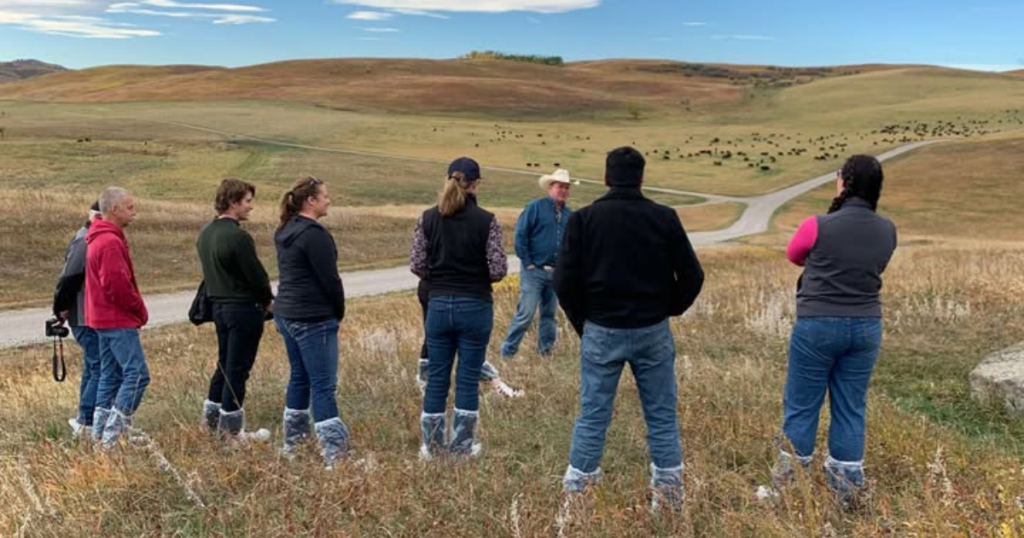
farm biosecurity boot covers on beef cattle farm
Biosecurity is everyone’s responsibility—for farmers, tour organizers and visitors alike. A farm tour is an excellent opportunity to showcase good biosecurity practices and highlight the vital role we all play in keeping Canada’s cattle and people healthy.

Why Biosecurity Matters During Tours

Biosecurity planning and precautions should be implemented during tours to limit the potential spread of disease to your livestock. This not only helps protect against significant reportable and trade-limiting diseases such as Foot and Mouth Disease, but also helps reduce the spread of endemic diseases, such as bovine viral diarrhea (BVD).

Hosting tours introduces various pathways for disease entry—through people, vehicles, animals and equipment. Visitors may include individuals who have had recent livestock contact or those unaware of farm biosecurity.

Keeping visitors safe is also important. Zoonotic pathogens can cause disease in both humans and animals; familiar examples include E. coli and ringworm.

Reportable diseases: diseases of significant importance to human or animal health, or to the Canadian economy. Not generally present in the industry. All suspected cases must be immediately reported by law to the Canadian Food Inspection Agency (CFIA) for investigation by inspectors.

Endemic diseases: diseases that are already present in the industry and may occur on an ongoing basis.

Zoonotic diseases: diseases that can be transmitted from animals to humans. They may be endemic or reportable.

Source: Government of Canada

Before the Tour

farm tourPlanning is key to a successful and safe farm tour. Before welcoming guests, take time to assess potential risks and put actionable measures in place to reduce them. Consider the following pre-tour planning steps:
1. Assess the risk level.

  • Consider the type and age of livestock currently on your operation. Stressed or young cattle are typically at higher risk than older animals. For example, have you recently received a load of freshly weaned, high-risk calves?
  • Think about where people are visiting from. Have visitors had livestock contact at more than one operation? Have they handled sick livestock in the past 14 days (high risk), or have they had no contact with livestock in the past 14 days (low risk)?
  • For international visitors, ask if they have had livestock contact within the past 14 days to prevent the introduction of reportable diseases, as recommended by the CFIA.
  • Identify the high-risk areas on your farm, such as calving barns, feed storage areas or sick pens.
  • Determine the goal of the tour. Does it require contacting livestock (high risk), or will visitors stay in a vehicle during the tour (low risk)?

2. Set boundaries and routes.

  • Plan a specific meeting area and designate parking locations away from livestock pens, feed or water sources to prevent contamination.
  • Plan a designated tour route. Aim to go from the youngest and most susceptible animals to the older animals.
  • Avoid high-risk zones and animal handling such as calving barns or sick pens when possible.
  • Post simple, clear signage such as “Stop—Biosecure Area” or “Clean Area Only” to help visitors understand and respect restricted zones. Signs can be printed in-house or purchased through farm supply outlets, provincial cattle associations or the Verified Beef Production Plus webstore.

3. Prepare personal protective equipment (PPE), cleaning and disinfectant supplies.

  • Ensure disposable boot covers or a footwear washing station are ready for visitors.
  • Choose durable waterproof boot covers that won’t tear easily in pens or muddy areas.
  • Provide handwashing or sanitizing stations at entry and exit points.

4. Communicate expectations before arrival.

  • Ensure visitors know what is expected and what is required (e.g., clean clothing and footwear).
  • Provide visitors with meeting and parking information ahead of arrival. When possible, provide a map or other detailed directions.
  • Provide simple explanations about why these steps matter and what biosecurity on your farm looks like.

During the Tour

Farms and ranches may implement a standard biosecurity protocol. A good starting point for this plan includes:

  • Keep a visitor log with names, dates and contact information of visitors.
  • Sanitize or wash hands upon arrival.
  • Direct guests to follow the planned route and respect restricted areas.
  • Provide boot covers for all participants.
  • If footwear washing is used instead of disposable covers, ensure brushes, disinfectants and clean water are available.

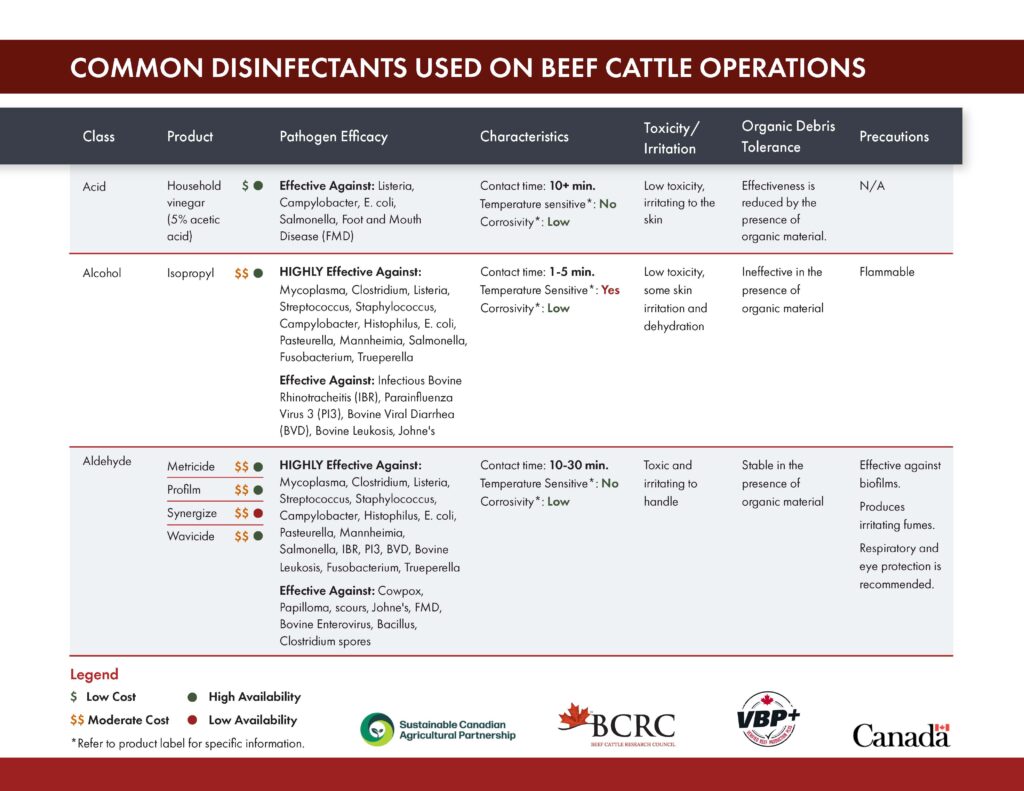
common disinfectants used on beef cattle operations
Click for four-page disinfectant table.
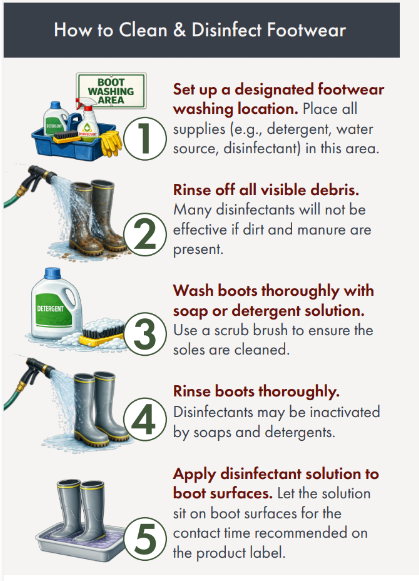
Best Practices for Boot Washing
  • Rinse and dry footwear.
  • Apply disinfectant solution according to label directions and contact time.
  • Allow footwear to dry before entering clean areas.
  • Remind guests not to touch livestock, feed or water troughs and to avoid direct contact with manure or bedding.
  • Have staff or volunteers positioned to help monitor compliance and answer questions—this also keeps the tour engaging and controlled.
Click to download one-page boot disinfection guide. 

how to clean and disinfect footwear

After the Tour

  • Have visitors sanitize or wash their hands before departing.
  • Disinfect any high-risk or heavily trafficked areas after the tour. There are many effective disinfectants available. Consult with your veterinarian for guidance on which product is right for your situation.
  • Safely dispose of used boot covers and cleaning materials.
  • Keep your visitor log for at least 12 months.
  • Perform health checks on animal groups that may have had contact with tour visitors, and contact your veterinarian with any concerns.
  • Review what worked well and where improvements could be made for future tours.

red and white cow behind fence in foggy winter
Click the image to learn more about the importance of biosecurity on your farm, including information on recommended personal protective equipment (PPE) for anyone in contact with livestock.

Farm biosecurity doesn’t have to be complicated. Simple and proactive steps can go a long way towards protecting your beef herd, your livelihood and the broader livestock industry. By planning ahead, setting clear expectations and keeping records, you can confidently welcome visitors while ensuring your tour is safe and enjoyable for everyone.

VBP+ producer portal

Did you know?

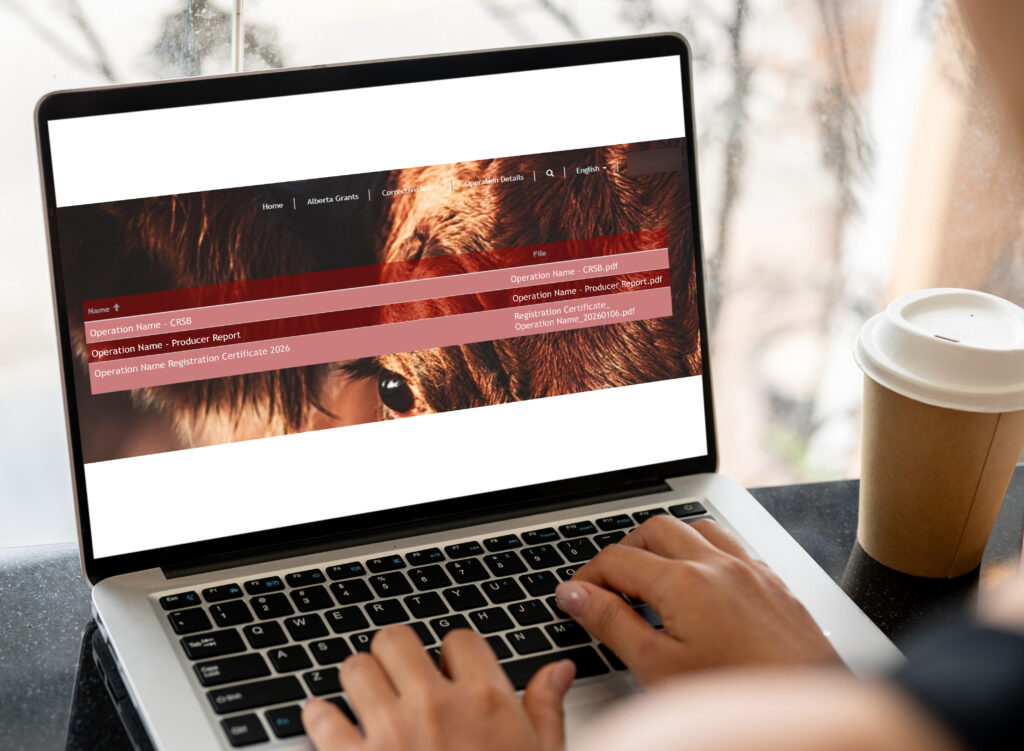
Recent updates to the Producer Portal give VBP+ Certified beef producers access to assessment summary reports! In addition to completing renewal assessments on the portal, producers can access these summary reports, their certificate and any outstanding corrective actions. Useful sample records for corrective action resolution can also be downloaded directly from the portal.

Producers who wish to apply for incentives linked to both VBP+ and CRSB certifications will be able to access certificates with a single click.

Until now, assessment summary reports and other documents have been sent to certified beef producers by email, so this update will allow greater flexibility in accessing vital VBP+ documentation, including current VBP+ Certification and active CRSB Certification.

Resolving corrective actions just got easier!

While communicating an outstanding corrective action request (CAR) has also been completed through email, phone or fax to date, upgrades to the portal include a CAR resolution. This feature provides downloadable sample records intended to reduce extra steps for beef producers working to resolve gaps identified during the on-farm assessment.

What can beef producers expect from the summary report?

When operations complete a VBP+ on-farm or renewal assessment, they receive an email with a Summary Assessment Report. The Summary Assessment Report outlines the results of the assessment, the assessor’s summary comments and any corrective action requests.

The Summary Assessment Report outlines results of the assessment, the assessor’s summary comments and any corrective action requests.

As VBP+ delivers two certifications with a single assessment:  the VBP+ Certification and certification to the Sustainable Beef Production Standard maintained by the Canadian Roundtable for Sustainable Beef (CRSB). Beef producers will now receive separate reports for each of these certifications.

The VBP+ Summary Report

The VBP+ Summary Report includes the following information:

  • The operation name
  • The VBP+ Inc. assessor name
  • The date of the assessment
  • Assessment scores determined based on 60 questions from the assessment pillars
  • The assessor’s summary comments
  • Corrective action requests from the assessment with deadlines for resolution
  • Date and scope of the next assessment (records assessment or self-declaration)
  • Other resources including provincial coordinator contact information, assessment experience survey and an appeals and complaints process
VBP+ Assessment Pillars
  • Animal Health
  • Animal Care
  • Animal Nutrition
  • Biosecurity
  • Emergency Response and Preparedness
  • Environmental Stewardship and Conservation
  • Transportation
  • Vulnerable, Distressed and High-Risk Cattle
  • Critical Control Points
  • Medicated Feeds
  • Leadership and Community
  • Coaching and Mentoring

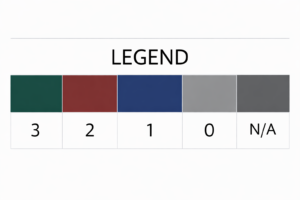
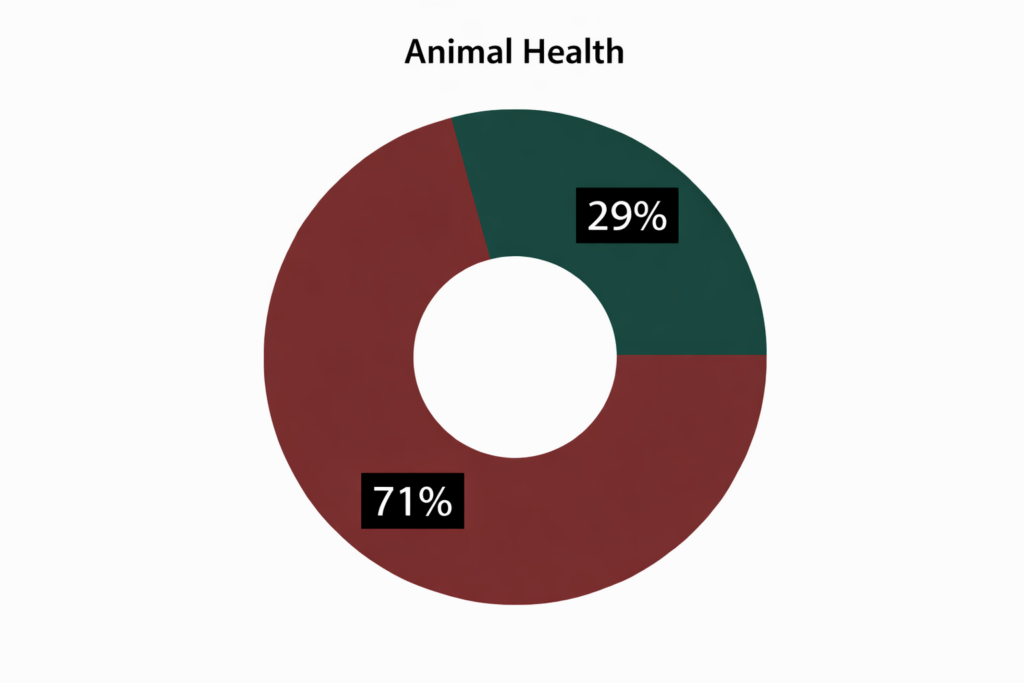
In this example of scoring in one of the 12 pillars, 71% of the questions related to animal health were scored a two and 29% were scored a three. For more information on questions and scoring criteria, consult the VBP+ Producer Manuals.

The CRSB Summary Report

The CRSB Summary Report reflects how an operation scores against the Sustainable Beef Production Standard maintained by the CRSB.

Additional Resources

This article was first published in the Fall 2025 issue (Vol. 2 No.3) of SaskCattle Times, and is reprinted on the VBP+ Blog with the publisher’s permission. To access the full digital issue of SaskCattle Times Magazine, click here.

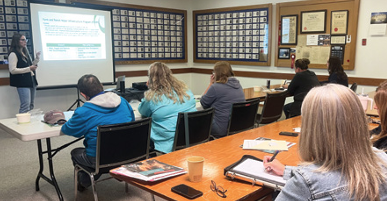
Verified Beef Production Plus producer training, photo courtesy SaskCattle Times


In today’s competitive beef industry, maintaining high standards of quality, safety, and sustainability are more important than ever. For beef producers, taking the Verified Beef Training offers numerous benefits that can significantly enhance business operations and consumer confidence.

“Taking the time to complete the VBP+ training not only opens up SCAP funding for producers but it shows that they are willing to learn more about what best management practises they can implement to prove to consumers the food we produce is sustainable and safe,” said Joleen Shea, Vice Chair of the Saskatchewan Verified Beef Board and rancher from Kindersley.

This training not only equips producers with essential knowledge and skills but also demonstrates a commitment to excellence that resonates across the supply chain. One of the primary benefits of Verified Beef Training is the emphasis on food safety.

While we are all ranching and farming because we probably love working with animals and being outdoors, the training emphasizes that at the end of the day we are producing food for people to eat and our actions on-farm can have consequences on the end product. Emphasis on records keeping ensures everyone involved on the operation knows which animals have been treated and what the treatment dates and withdrawal dates are.

Tracy Hebert, Knowledge Mobilization and Communications Director with the Beef Cattle Research Council explains that the “VBP+ training helps producers and their employees minimize risk and provides opportunity for adopting beneficial practices and innovations.” The training delivers practical information, ideas, and tools that help producers strengthen their operations. It emphasizes better record-keeping practices to prevent problems such as double treatments, while also ensuring that if an operation is ever questioned, detailed records can demonstrate due diligence.

Producers also gain proper guidance on vaccine handling and injection techniques so the time and expense invested in herd health lead to the results they expect. By formalizing best practices, the training further enhances operational efficiency and supports long-term success.

The training provides producers with practical information, ideas, and tools that strengthen day-to-day operations. It encourages accurate record-keeping to prevent issues like double treatments and ensures that, if questions ever arise, detailed records demonstrate due diligence. Participants also learn proper vaccine handling and injection techniques so that the time and money invested in herd health achieve the intended results. In addition, by formalizing best practices, the training helps producers improve efficiency across their operations.

The training also strengthens the industry’s reputation and reassures customers about the high quality of Canadian cattle and beef. It does this by providing guidance on reducing disease, minimizing carcass defects, and promoting best practices in areas of public concern such as painful procedures, livestock transportation, and grassland management.

Producers who complete the VBP+ training demonstrate that they are proactive in caring for animals, the land, and the food supply chain. It provides producers confidence that plans are in place for emergency  response, and that practices done on farm are in line with national standards.”

“At times the industry is focused on reporting only how many operations are VBP+ Certified (completed the on farm assessment), but I think the bigger story is how many people and operations the VBP+ program is impacting by completing the training,” explained Karla Hicks, Chair of Saskatchewan Verified Beef Production Board and rancher from Mortlach.

“The training provides new and different ideas that you can implement on your operation like adding additional information to your treatment records, having protocol around needle disposal, vaccine storage and correct temperatures that don’t include the dashboard of the truck! Biosecurity is another big topic that is covered in the training. It is not meant to tell people how to manage their operation, but provide awareness of areas to improve upon to prevent a disease outbreak.

“For example, if you invite a neighbour or client to come and walk through a pen of calves or tour your cow herd, the biosecurity component of the training will help you think a little differently about the visit and provide practical suggestions on how you can still tour your cattle, but simultaneously having protocol in place to prevent a disease outbreak. These practices aren’t meant to complicate anyone’s operation, only enhance what you are already doing. The training component of VBP+ is invaluable and I don’t think we give enough weight to the outreach and impact it’s having.”

If you are interested in taking the training, it is available online anytime at www.verifiedbeef.ca, or you can contact your local VBP+ coordinator to set up an in-person training workshop in your area.

This article was first published in Volume 5 Issue 2 of ABP Magazine (May 2025), and is reprinted on the VBP+ Blog with the publisher’s permission. To access the full digital issue of ABP Magazine, click here.

When a producer decides to get certified with the Verified Beef Production Plus (VBP+) Program, they go through an on-farm assessment to confirm that they are meeting the requirements of the VBP+ standard. This process can sound intimidating but is really designed to help producers succeed and make the most of their certification.

What is the VBP+ on-farm assessment?

The on-farm assessment (previously known as audit) consists of a visit to the farm by a third-party assessor. When an assessor comes to the farm, they will walk through the key areas of the farm with you, including cattle pens, processing areas, feed and medication storage, and calving facilities. The assessor will also look over the key records that producers keep as part of the VBP+ program, making sure that they include all of the required components for the program.

The assessment is meant to feel conversational. Assessors are there to understand how your operation works and listen to the expert on your farm—you!

“For many producers, the VBP+ on-farm assessment feels like touring a neighbour through the farm,” says Shannon Argent, VBP+ business manager and a VBP+ Certified producer. “The process is designed to celebrate all of the successful practices and tools producers have implemented and identify areas where risks could be reduced.”

Dan Skeels of Anchor D Simmentals & Charolais completed an on-farm assessment last fall. “Our assessor was very complimentary about what we do,” says Dan. “He was great and really helpful.”

When an assessor is assigned to your farm, they will reach out to you to arrange a time for the assessment that works for you. They will also confirm any biosecurity protocols that you may have for visitors coming to your operation to make sure they are respecting the way your operation runs.

What happens after an on-farm assessment?

After the assessor visits the farm, they will complete a report of their findings. The results of the report are kept between the VBP+ program and the producer, and are intended to help the producer identify the areas they are excelling in and places they may want to dive further into to improve.

“The on-farm assessment is not a pass or fail evaluation,” says Shannon. “If an assessor identifies an area where the operation is not meeting a requirement of the VBP+ standard, they will issue what is called a corrective action request (CAR). The assessor will explain the areas where a producer may need to adjust their record-keeping or practices to meet the program requirements, and the producer will be given time to implement those changes.”

After the assessor visits the farm, they will complete a report of their findings. The results of the report are kept between the VBP+ program and the producer, and are intended to help the producer identify the areas they are excelling in and places they may want to dive further into to improve.

Learn more about the assessment in the VBP+ Producer Reference Manual Self-Assessment Field Guide.

“The on-farm assessment is not a pass or fail evaluation,” says Shannon. “If an assessor identifies an area where the operation is not meeting a requirement of the VBP+ standard, they will issue what is called a corrective action request (CAR). The assessor will explain the areas where a producer may need to adjust their record-keeping or practices to meet the program requirements, and the producer will be given time to implement those changes.”

The program is not designed to be prescriptive and allows producers to design their own processes and management practices to meet the program. A good example of this approach is treatment records. While VBP+ offers templates that include all of the required information, producers are not required to use these templates. If your notebook, spreadsheet, iPhone, or herd management software are working well for you, there is no need to reinvent the wheel. The assessor will work to understand your systems, not impose one upon you.

“The program to us is common sense,” says Dan. “If you’re new to the program, I would say there’s no need to overthink it. It’s probably what you practice everyday. It’s important that our industry is transparent and that we are able to show people what we do everyday for a living.”

Who are the assessors?

The assessor assigned to your operation is there to help you succeed. While they cannot provide coaching or help you implement the VBP+ standard, they are more than willing to answer questions about the requirements of the program. Assessor Deborah Armstrong and her husband were among the first group of ranchers certified with the Verified Beef Program on their cow/calf operation. “I commend the fact that the VBP+ program is built by producers for producers,” says Deborah. “Assessors, as ranchers themselves, have a sound knowledge of the industry and understand the practical aspects of everyday ranching. For me, being an assessor is an important way to recognize the hard work and commitment of producers.”

“Many of our on-farm assessors are producers themselves,” says Shannon. “They are there to help fellow producers and their operations succeed.”

How do I get certified?

Producers who are interested in completing an on-farm assessment to pursue VBP+ Certification can contact VBP+ Delivery Services Inc. to submit an application. Find contact information and more details on the certification process on verifiedbeef.ca under the Certification tab.

VBP+ pre-certification webinar: Getting Ready for Your On-Farm Assessment

Whether you’re pursuing your first VBP+ or CRSB certification or preparing for renewal, this webinar is for you! 

Registration is now open for the Verified Beef Production Plus (VBP+) “Getting Ready for Your On-Farm Assessment” webinar. After participating in this webinar, the on-farm assessment will be more efficient, taking less time and with greater ease as you will be well-prepared for assessment questions.   

This webinar will dig into the assessment process and the records required for assessment. With the understanding that every operation is different and utilizes unique systems and processes, this webinar provides the opportunity to address specific questions related to your operation.  

What You Can Expect from This Webinar

This webinar is being offered on two separate nights to accommodate producers across Canada in differing time zones. The webinar presentation will be the same on each night.  

Choose the session that works best for you! 

Eastern Time Zone: 

Monday, December 1, 7:00 pm Eastern Time  

4:00 pm BC | 5:00 pm AB | 6:00 pm SK & MB

7:00 pm ON & QC | 8:00 pm NS, NB & PEI 

Western Time Zone: 

 Tuesday, December 2, 7:00 pm Mountain Time 

6:00 pm BC | 7:00 pm AB | 8:00 pm SK & MB

9:00 pm ON & QC | 10:00 pm NS, NB & PEI 

Pre-Certification Tips to Help You Prepare

Producers who participate in a pre-certification consultation prior to the VBP+ on-farm assessment are consistently better prepared. The purpose of this webinar is to provide this pre-consultation in an easy-to-access format with flexibility to meet your schedule.  

Live Questions & Answers with VBP+ Staff

This webinar will provide a live Q&A session, providing you with the opportunity to ask questions specific to your own operation and with specific reference to any area of the on-farm assessment you may be unsure about. This webinar is ideal for producers who are considering certification or have submitted their application and are awaiting assessment! 

Can’t make the live session? No problem—all registrants will receive the recording. 

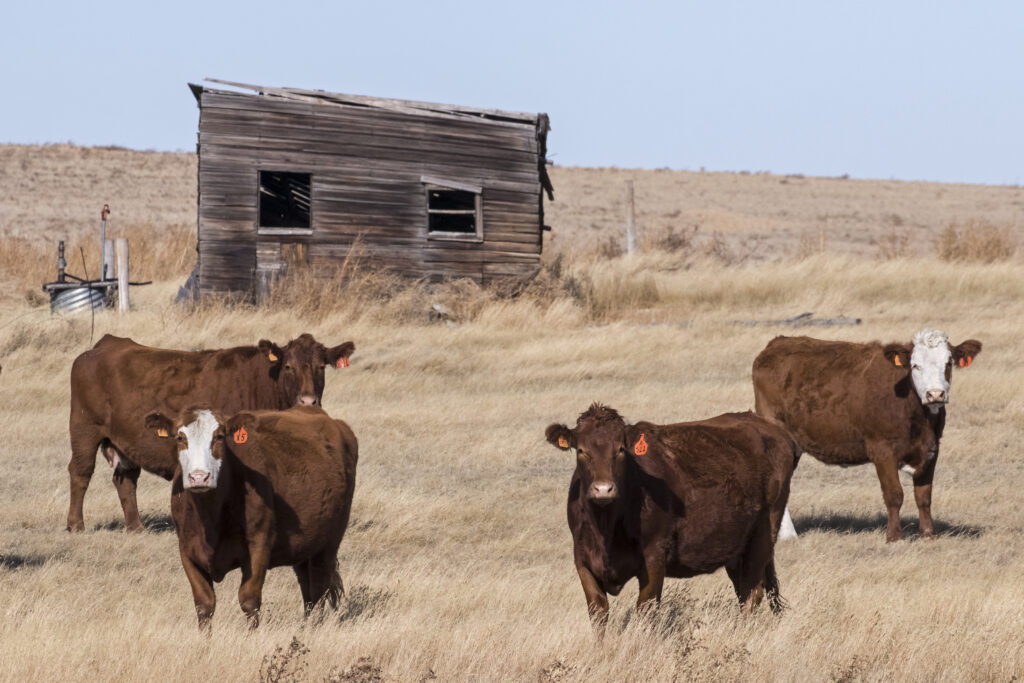
Canada ushers in the fall season with beautiful colors, cooling weather, reduced daylight hours, migrating birds, mating ungulates like deer and elk, and scavenging bears. Depending on conditions in your region, cattle are often still out on pasture, on hay fields, swath or bale grazing or utilizing cereal crop residues.

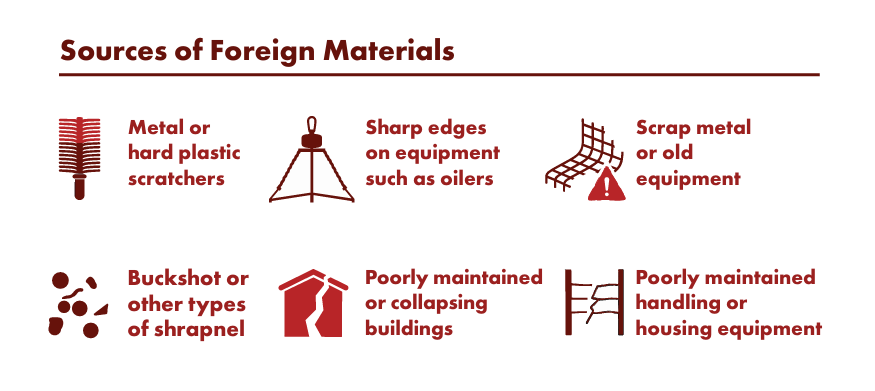
Fall also coincides with hunting season. Producers can maintain the balance of biodiversity and wildlife conflict through managed and controlled hunting access. While managing access to your property by hunters, it is important to ensure these hunters are respectful of the presence of cattle on your operation to reduce the risk of unintended foreign materials in beef carcasses.

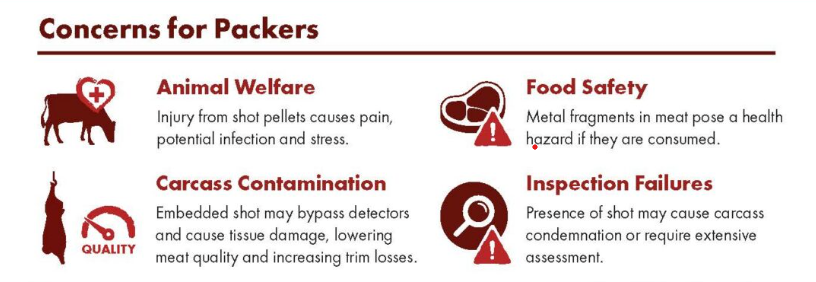
The potential of birdshot and buckshot in beef carcasses is an ongoing concern. As a landowner and/or manager of cattle, it is important that prevention and risk reduction remain a priority.

How to protect cattle and consumer trust by mitigating the risk of birdshot and buckshot in beef carcasses:
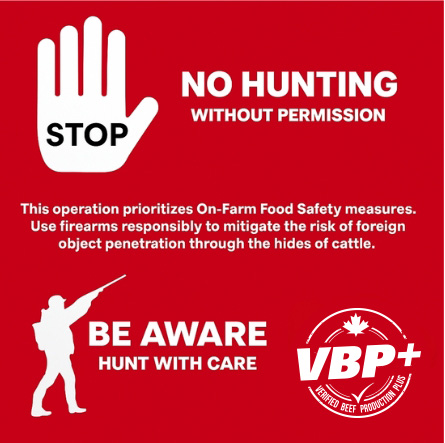
  • Post “No Hunting” or “No Trespassing” signs on your property so only hunters with permission, and who have been informed of where cattle are located, hunt on your property.
  • Inform hunters of your operation’s commitment to reducing the risk of foreign material contamination in carcasses and confirm their commitment to responsible hunting practices.
  • Ensure that pastures and fields where cattle are grazing or feeding have good fencing to prevent cattle from straying into property where hunters are not aware of their presence.
Livestock on pasture, No hunting without permission, no trespassing VBP+ sign
Need signage for hunting season? VBP + has you covered! Note: Shipping is temporarily paused due to the postal strike, but will resume once the strike is resolved.
How to reduce risk when using firearms:
  • Consider zone of fire when using firearms to deter predators (e.g., coyotes, birds) near herds, feedlots or silage pits.
  • Don’t use shotguns for loud sounds to help move difficult cattle from bush areas.
  • Support training for new firearm users on the operation.
  • Treat every shot as having the potential to travel and spread.
  • Consider zone of fire and the right tool for the right job when performing necessary euthanasia.

Birdshot and buckshot contamination of beef carcasses can be a problem caused by irresponsible hunting or handling practices, so it is worth the effort to prevent these production-limiting, costly physical hazards that threaten consumer trust.

Facebook
LinkedIn
X
Threads
beef producer filling syringe
Having one person responsible for managing vaccines (mixing, filling syringes, monitoring temperatures in coolers) or other medications can increase efficiency and ensure good management practices to prevent cross contamination of vaccines and recommended needle changes in the branding pen. Photo credit: VBP+

The days are getting longer, the seasons are shifting, spring is on the way! On your beef cattle operation, the task of the season is changing too. Transitioning from calving season through seedstock sale season, spring means branding season is just around the corner.

The branding pen can be chaotic, with lots happening at once. A little preparation ahead of time can go a long way. The first step is determining what your spring processing protocol for young calves will be. If you have already had a discussion with your veterinarian about your annual herd health protocols, such as spring calf processing, you will likely have many of these answers. Not all operations are alike but here are some protocols to discuss with your veterinarian; vaccine protocol, pain mitigation protocols and implant protocols (if it applies to your operation). VBP+ has a herd health protocol template you can take to your veterinarian if one is not provided. You can find it here.

Once you have your product requirements, you can plan for the equipment needed  such as syringes, needles, sharps containers and animal markers to name a few Is the equipment you need clean and in good working order? Are your multi-dose syringes calibrated? Now is a good time to check. A malfunctioning syringe that dispenses either too much product can cost you money and run you short of vaccine. It’s a good practice to give your syringes a spring cleaning using only hot water. Never use any detergent/soap to clean syringes, as any residue can affect your vaccine. Also remember never to use a syringe that was used for antibiotics as your vaccine gun – when possible, label and use designated syringes for vaccines.

Planning for your people resources is important too. Depending on what your spring processing/branding protocol is, there will likely be multiple people descending on each calf either on the ground or in the table, many of them friends or family that help out once a year. Are they aware of any biosecurity concerns or protocols on your operation? Do they need a refresher on how to give sub-cutaneous and intramuscular injections properly and safely? A reminder on how to move around the pen to keep themselves, others and animals safe? Who do they go to if they have questions or if something goes wrong?

Create open communication with your volunteer crew about possible deviations that could occur during branding (ex. animal moved and missed giving the full injection, calf was let go before injection was given). The last thing you want is someone to make a mistake (for example, breaking a needle in an animal or double vaccinating) and you don’t know about it. A quick meeting or training session before the big event can help you to make sure everyone involved knows your operation’s on-farm food safety, biosecurity or animal care objectives and values.

Keep your individual and group treatment records handy to include any treatments and vaccinations done on branding day. It’s also a good idea to keep extra RFID tags around in case you find a calf that has lost one.

Sometimes, calves can have adverse reactions to vaccines. Keep yourself prepared with epinephrine on hand. You can also prepare yourself for other accidents or emergencies by keeping a first aid kit handy and having a plan to extinguish a fire around the branding pot.

Brandings are a good way to get many spring tasks knocked off the list prior to pasture turnouts and indulge in a little social connection with family and friends. Plan for a successful and safe branding day. You, your operation and your livestock will be the better for it.

The Canadian Beef Sustainability Acceleration Pilot (CBSA) hopes to achieve in one year what many in the industry have been trying to accomplish for years – deliver a certified sustainable supply chain to foodservice and retail customers.

Led by Cargill, Verified Beef Production Plus (VBP+) and the Beef InfoXchange System, the CBSA aims to sate demand from foodservice and retail companies for gate to plate tracking that verifies the production practices used in raising an animal as sustainable. What’s more, foodservice companies and retailers are helping facilitate the development of a sustainable supply chain in Canada through providing financial incentives for qualifying cattle.

VBP+ plays an important role in the development of a sustainable supply chain. Eligibility for the CBSA requires that all the places an animal stays throughout their lifetime are VBP+ Registered and that they be processed in an audited packing plant (currently Cargill High River). VBP+, a training and on-farm verification program for Canadian beef producers developed and managed by the CCA, is delivered through various provincial beef organizations across the country.

McDonalds, Loblaws, Swiss Chalet, and Original Joe’s are among the foodservice and retailers that have come forward to provide financial incentives for qualifying cattle. This is significant in terms of timing because they are providing financial incentive before they can make claims back to their customers. In other words, McDonalds, Loblaws, Swiss Chalet, and Original Joe’s are so committed to supporting certified sustainable beef (a program that meets commercial Canadian beef industry standards, unlike most other “certified” programs) they are willing to support the development of supply chains to provide it before they can reap the benefits in their stores. Now it is up to us, as producers, to build those supply chains.

Our role in CBSA as beef producers is simple. Complete the VBP+ verification process (including the audit) to become Registered and then try to ensure you sell your calves (or buy calves if you are a backgrounder or feedlot operator) to other VBP+ Registered producers. To get Registered and have your cattle qualify simply:

  1. Be or become a VBP+ Registered Producer;
  2. Be or become a BIXS member;
  3. Age verify or move your cattle to the Canadian Cattle Identification Agency (CCIA) database (either directly or through BIXS).

If you have any questions, please feel free to reach out directly to me or contact your local VBP+ Provincial Coordinator. Stay tuned for updates.(Reprinted with permission from the Canadian Cattlemen’s Association)

My name is Cecilie Fleming and I am a seedstock and cow calf producer from west of Granum, in southwest Alberta. Our operation is a longtime established farmstead surrounded by ranching and feedlot production. Our place consists of farmland, riparian areas, and tame and native grassland ecosystems supporting native species. Is everything perfect on our place? – No. But being a part of Verified Beef Production Plus (VBP+) as Registered Producers has helped us look inward at our operation to see how we can improve and minimize risk.

I sit as the National Chair of the VBP+ Management Committee, the roll of which is to set policies ensuring the VBP+ program is meaningful and usable for beef producers and delivers value. The management committee consists of national producer representation by Province or Region. VBP+ is something that beef producers in Canada can be proud of as an excellent and affordable tool to help them tell their story of beef sustainability to the world.

We are a business based on science, selling to consumers, who often choose based on emotion, through marketers who interpret what consumers need. This relationship is why it is critical for beef producers in Canada to be involved to ensure marketers are telling our truths. VBP+ is the national program that can help producers help themselves by being a part of the Sustainable Beef movement.

Who: Registered VBP+ farms, ranches and feedlots are run by producers who recognize the need to be a part of a national verification system to meet the needs of some of our end users. They are producers willing to invest time and resources to confidently make the claim of VBP+ Registered status as VBP+ positions itself to be a delivery agent of beef sustainability verification nationally.

What: A Registered VBP+ Producer takes training in on-farm food safety, biosecurity and animal care, they assess their operation’s environmental wellbeing, as well as the operation’s human resources and community involvement. The training and assessments ensure producers document, keep records, are prepared to meet a 3rd party audit, and take part in annual assessments to maintain their registered status.

When: A producer can become involved with VBP+ any time of year by contacting their Provincial VBP+ Coordinator and initiating the process. There are 3 modes of training: scheduled in person workshops, scheduled webinars and anytime online training. Once training is complete, producers begin keeping appropriate records for a set period of time (6 months for cow-calf, 3 months for feedlots) leading up to their first audit. They prepare by completing a pre-audit checklist and then a 3rd party auditor will be assigned to their operation. The auditor contacts the producer to schedule the on-farm audit at the producer’s convenience.

Where: Everywhere beef production takes place in Canada. VBP+ is a national verification program available to all beef producers in the supply chain.

Why: We have end users asking for beef raised sustainably. If the end user is going to make the claim that some or all their beef products are ‘sustainably raised’, they must be a part of a robust program with documentation, audits, rigor and transparency to backstop those claims. VBP+ and the Canadian Roundtable for Sustainable Beef (CRSB) are working together to establish equivalency so Registered VBP+ beef operations would qualify to be recognized as Verified Sustainable Operations. Clearly, we did not want multiple end users building lists of sustainability criteria where producers would face trying to meet the needs of many differing platforms. The CRSB has been a great venue to collaborate and come to consensus on what defines beef sustainability in Canada. The guidance enables producers to tell their story and demonstrate they are doing things right and on a path of continual improvement. Being a Registered VBP+ Producer in good standing would, in time, allow you to make the claim of Sustainably Raised Beef.