SIMPLE.

PRACTICAL.

TRUSTED.

VBP+ BLOG & NEWS

2022
Producer part in prevention: Helping mitigate FMD in Canada
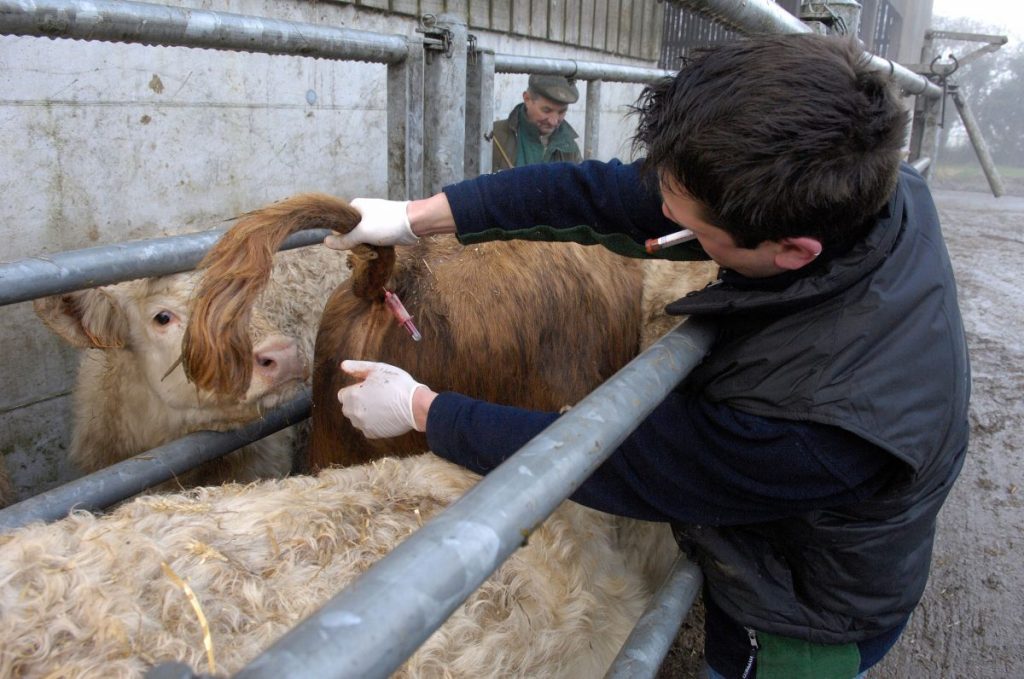
testing beef cattle

By now, you’ve likely heard of Foot and Mouth Disease (FMD), a disease known for being extremely contagious and extremely severe. In the news right now, FMD strikes panic in the Canadian beef industry. That’s why it’s key that each and every one of us does our part to prevent the introduction of FMD into our Canadian cattle herd.

Fast Facts About FMD

  • Occurs in livestock and wildlife with cloven hooves – cattle, pigs, sheep, goats, bison, elk, deer, wild boars, etc.
  • Many animals recover, but are left in a weak state
  • Found in 77% of the global livestock population – Africa, Middle East, Asia, and some parts of South America
  • Spread by contact with bodily fluids from affected animals, contaminated animal products, food, feed, equipment, clothing, footwear, or hands
  • Can be spread long distances by the airborne virus
  • Humans can carry the virus for up to 36 hours in the throat
  • There is no treatment

Source: Foot and mouth disease | Alberta.ca

Signs of FMD in Cattle

  • Sores and then blisters/ulcers on feet, nose, mouth, udder, scrotum
  • Excessive saliva and drooling
  • Lack of desire to move
  • Fever
  • Low appetite
  • Reduced milk yield
  • Loss of body condition
  • Occasional abortions

Source: Foot and mouth disease | Alberta.ca

What to Do If You Suspect a Case of FMD

FMD is a reportable disease and must be reported to the Canadian Food Inspection Agency (CFIA). Whether a case is suspected or confirmed, report it to the chief veterinary office in your province within 24 hours.

Source: Foot and mouth disease | Alberta.ca

Tips for Travellers

  • Declare all meat and other animal products brought into Canada (includes semen, embryos, and hides)
  • If coming from a country with FMD, avoid farms, parks, zoos, feed mills, equipment, and livestock for 14 days
  • If you must come into contact with an above area:
    • Clean and disinfect footwear, or ideally, dispose of footwear worn abroad
    • Dry clean clothing worn abroad
    • Thoroughly shower and clean under fingernails
    • Disinfect all personal belongings
    • Follow all biosecurity procedures at the facility
  • If you live on a farm, avoid going home for 36 hours by staying at an alternative residence where someone can bring you clean clothing and footwear to wear home

Source: Foot and mouth disease | Alberta.ca

What Happens If FMD Reaches Canada

If FMD was identified in Canada, the CFIA would identify exposed premises, cull exposed and high-risk potentially exposed livestock, and decontaminate the environment. Disposal would occur by incineration or burial.

The Canadian beef industry is continually advocating for the development of an FMD vaccine bank. However, routine FMD vaccination is not allowed in Canada for several reasons. Primarily, routine blood tests cannot distinguish vaccinated animals from infected ones, making vaccinated livestock ineligible for export with Canada’s trading partners. If Canada did widely vaccinate, we would lose “FMD-free without vaccination” status. Many of Canada’s trading partners, including the US, restrict imports from countries that vaccinate for FMD, even for animals that are proven to not carry the virus.

However, if prevention and disease control fail, Canada may vaccinate for FMD to reduce widespread culling. To regain “FMD-free without vaccination” status, Canada would have to wait 3 months after the last case, or in the case of vaccination, 3 months after the slaughter of the last vaccinated animal.

If widespread culling occurs, producers will be compensated for the market value of their lost animals.

Source: Questions and Answers – Response to Foot-and-Mouth Disease (FMD) – Canadian Food Inspection Agency (canada.ca)

Tips for Preventing FMD Introduction to Your Farm

  • Prevent visitors from accessing your livestock
  • Prevent livestock contact with wildlife
  • Regularly disinfect footwear, clothing, and equipment
  • Keep records of people, livestock, feed, supplies, and equipment moving on and off your farm
  • Keep new animals separate for an initial quarantine period (at least 5 days)

Source: Questions and Answers – Response to Foot-and-Mouth Disease (FMD) – Canadian Food Inspection Agency (canada.ca)

More Information

To learn more about FMD and biosecurity preparedness, check out the following resources.

VBP+ Producer Reference Manual – Vulnerable, Distressed & High-Risk Cattle, Biosecurity and Emergency Response Plan modules in particular
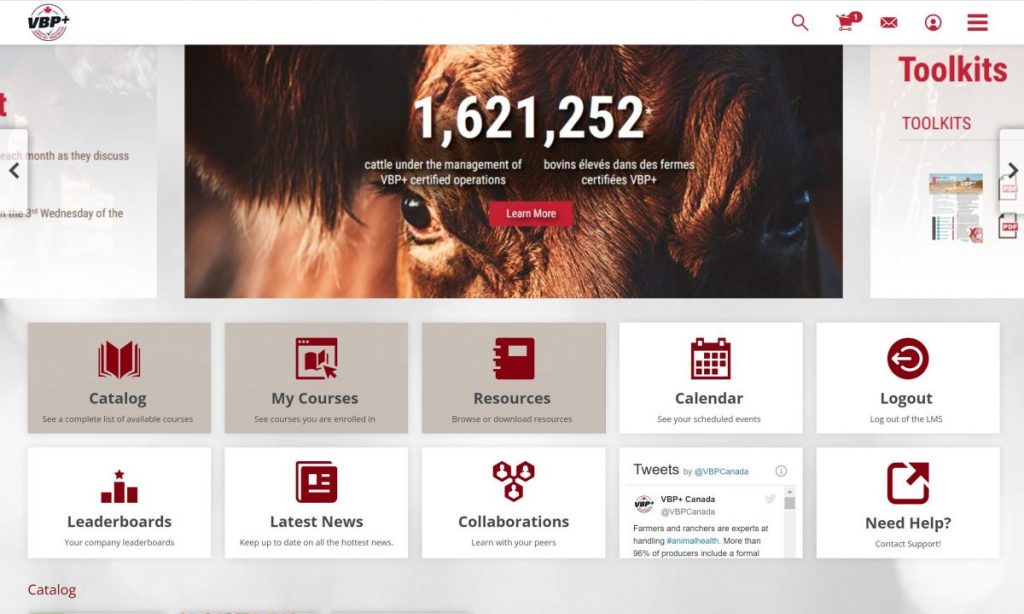
VBP+ Training 2.0 on the Canadian Cattle Learning Center

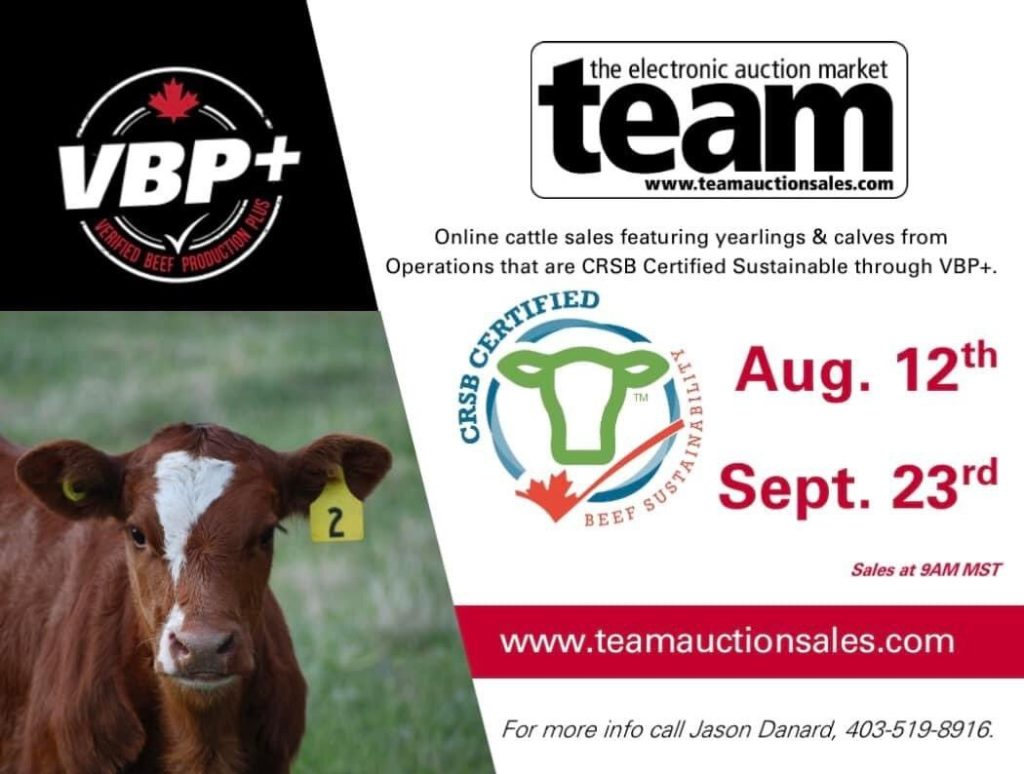
TEAM feeder cattle sale featuring VBP+ Certified operations
electronic auction mart VBP+

TEAM is hosting a feeder cattle sale featuring cattle from operations with CRSB Certified Sustainable status through VBP+. The sale will start at 9:00am MDT on Friday, September 23rd and will offer both calves and yearlings.

Contact Jason Danard with TEAM to ask further questions or book your cattle into the sale.

Find the sale info here. If you are interested in buying, be sure to check out the details on sale lots and get approved to bid before sale day!

Canadian Cattle Learning Centre: More than just training

One of the exciting new elements of the Canadian Cattle Learning Centre is the redesigned online VBP+ training modules. However, this new platform isn’t just for new members of the VBP+ program.

Most obviously, training evolves with the changing Canadian beef industry. Certified producers who enroll in the Canadian Cattle Learning Centre can review the new VBP+ training modules to see what has been updated to reflect changes since they took the training. Additionally, operations that seek out additional training outside of the VBP+ program can upload these experiences to their transcript to demonstrate commitment to continuous improvement.

In addition, no one’s memory is perfect! An enrolment fee of $50 secures access to the Canadian Cattle Learning Centre for five years, letting producers come back to the training modules as much as they’d like to review concepts and program requirements. The new training also features self-assessments throughout to help producers track their progress towards meeting all standards. This tool can help certified producers reassess their operations to make sure they are still meeting requirements throughout the five-year audit cycle, particularly before records assessments and self declarations.

The Canadian Cattle Learning Centre is far from complete. In the future, VBP+ will continue to develop and add new training opportunities to the platform, providing centralized access to a variety of learning. A module focusing on the pre-certification process to help prepare new producers and operations seeking re-certification is currently in the works.

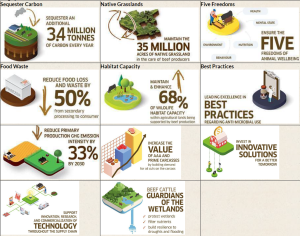
Most importantly, the Canadian Cattle Learning Centre has relevance in the big picture of the Canadian beef industry. The Canadian Beef Advisors released a set of nationally framed goals for the industry, which focus on securing environmental, social, and economic security into the future. Many of these goals are targeted at maintaining public trust in the Canadian beef industry.

VBP+ producers already demonstrate commitment to sustainable beef production by meeting program requirements. However, industry advocates need a way to show tangible evidence of the good work of Canadian beef producers to policymakers, consumers, and other stakeholders. Training rates on the Canadian Cattle Learning Centre, as well as producer transcripts, will provide simple metrics to communicate the dedication of Canadian beef producers to continuous improvement as the industry evolves in response to consumer demands.

In general, the Canadian Cattle Learning Centre is a win-win-win situation. Producers gain an easy to access, engaging platform for training and a simple way to track their industry-related education. Industry advocates acquire a simple method for communicating the good work that Canadian farmers and ranchers are already doing. Finally, other stakeholders outside of the industry, including consumers, gain confidence in the safety and sustainability of the Canadian beef on their plates.

To register for the Canadian Cattle Learning Centre, click here.

To learn more about the Canadian Cattle Learning Centre and how to sign up, see the last VBP+ blog post.

Explore the brand new Canadian Cattle Learning Centre

Canadian beef producers are always keen to make their operations the best they can be. However, taking time away from the farm to seek out learning opportunities is rarely easy. Luckily, VBP+ has launched the Canadian Cattle Learning Centre to make it easy for ranchers to improve their operations from the comfort of their own homes.

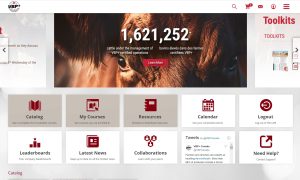
The Canadian Cattle Learning Centre houses the brand new eleven online training modules for the VBP+ program. Producers can take the training at their own pace as they navigate through content which has been refreshed to be more engaging and relevant to the modern industry. The modules include graphics, animations, links to key resources, and interactive activities to make training more effective and more fun!

One of the key features of the new online training is the self-assessment tool. Throughout each module, trainees are presented with questions to reflect on how their operation is doing in relation to key VBP+ program requirements. While responses are not evaluated by auditors, producers can view and print their results to assess their progress towards meeting all requirements for a successful audit.

As well as the VBP+ training modules, producers can also upload other training that they have completed outside of the VBP+ program. The Canadian Cattle Learning Centre compiles these opportunities into a transcript, allowing producers to demonstrate their commitment to continuous improvement on their operations through education. In the future, VBP+ is looking to create additional content to provide more training opportunities directly through the Canadian Cattle Learning Centre.

How to Sign Up

To register for the Canadian Cattle Learning Centre, click here. Follow the sign-up process below:

  1. Hit Log In at the top right corner, then choose Sign Up at the bottom of the pop up menu.
  2. Enter your personal information and click Sign Up.
  3. Enroll in the course Subscription 2022 and pay the $50 enrolment fee for five years of access.
  4. Enroll in the VBP+ 2.0 course to take the online training.

To take the entire course one module at a time, please select the individual modules/lessons. While completing individual modules provides the complete training and includes self-assessments for each module, there is no self-assessment summary provided at the end of each module.

Need Help?

If you have questions about the Canadian Cattle Learning Centre or the new online training, please reach out to your provincial coordinator. These individuals are there to help guide you through the VBP+ program every step of the way and help you achieve success in training and/or certification.

To find the contact information for your provincial coordinator, click here.

It pays to be sustainable: FCC announces Sustainability Incentive Program

Farm Credit Canada (FCC) is working with innovative producers to grow a more sustainable industry. FCC recognizes that sustainability is important to the future of agriculture, and wants to encourage an increase in the number of certified producers. To do so, FCC has opened their Sustainability Incentive Program to eligible customers who are certified through the Canadian Roundtable for Sustainable Beef (CRSB).

fcc

FCC will provide a payment to FCC customers who are CRSB certified through one of the CRSB’s certification bodies, including VBP+. So, VBP+ certified producers can take advantage of this opportunity.

The payment from FCC will be calculated as a portion of their lending with FCC, with a maximum of $2,000 paid per year. Eligible producers can reapply for the incentive payment annually.

Already Certified?

Customers who are already CRSB certified can apply for the program here.

Want to Participate but Aren’t Certified Yet?

The first step to getting certified is being trained. Contact the provincial VBP+ coordinator for your province using the info found here to learn about in-person and online training opportunities. Your provincial coordinator will also guide you through the process of preparing for an audit to get certified.

Once you are trained and are ready to get ready for certification, the next step is contacting VBP+ Delivery Services Inc. (the certification branch of VBP+). Find contact info here.

For an overview of the certification process and five-year audit cycle, click here.

Looking for More Information?

To learn more about the program, click here.

Questions about FCC Sustainability Incentive Program should be directed to:

Jill McAlister, Corporate Communication, Farm Credit Canada

306-540-4840 | jill.mcalister@fcc.ca