
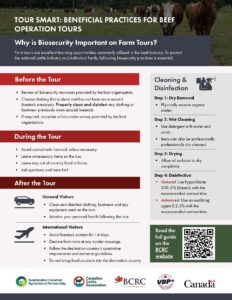
Farm tours are a great way to learn from others, network, build relationships, showcase your operation and give visitors a close look at the beef industry. However, with more boots on the ground comes more opportunity for disease to move between animals and operations.
Whether you’re welcoming a school group, hosting industry professionals or visiting a neighbouring operation, a little planning can go a long way. Biosecurity starts before the tour begins and continues after the last visitor heads home.
Good biosecurity requires everyone’s participation. There are practical steps that tour hosts, cattle producers and farm visitors can take before, during and after a tour to help reduce biosecurity risks.
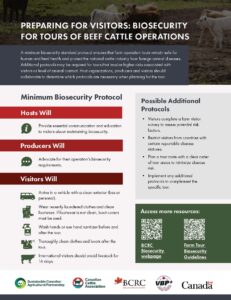
Tour hosts play an important role in planning for biosecurity and communicating expectations with everyone involved.
Before the tour, consider the goals of the tour and activities planned, the level of animal contact and the risks associated with the visitors attending. For example, a tour that remains outside production areas presents different considerations than one involving direct animal contact. Additional considerations may be needed for international visitors.
Connect with the bus company, cattle producer and visitors to communicate where visitors will go, what activities are planned and what biosecurity practices they should expect. Communication templates for bus companies, cattle producers and visitors, along with information for international visitors, can help hosts prepare ahead of the tour.
The goal isn’t to stop people from visiting farms, it’s to plan the visit so everyone can enjoy the tour while minimizing unnecessary biosecurity risks.
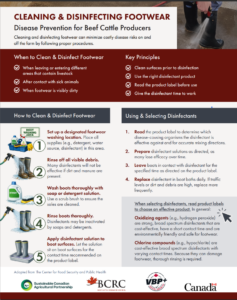
During the tour, follow the planned biosecurity measures, including recommended boot-cover practices and appropriate personal protective equipment (PPE) based on the activities and level of animal contact.
After the tour, keep contact information for visitors, the bus driver and the producer so everyone can be contacted if a disease concern or outbreak is identified following the visit.
For more detailed requirements, tips and email templates for planning and managing a tour, see Resources and Recommendations for Tour Hosts.
Beef cattle producers can help make a tour successful by working with the host to ensure visitor activities fit with the operation’s biosecurity practices.
Before the tour, work collaboratively with the tour host to develop a plan that meets your operation’s biosecurity requirements. Share important information with the host, such as any recent disease concerns or outbreaks that could affect the planned visit and identify areas that visitors should avoid.
During the tour, be available to guide visitors and help the host implement the planned biosecurity measures. Remind visitors of the operation’s protocols and, where appropriate, explain why they are important.
After the tour, be diligent with cleaning protocols and monitor the herd for changes in health status, particularly among animals that had contact with visitors. Ensure visitor information is accurately recorded and retained if needed.
Visitors also have an important role to play in protecting animal health and the industry. Following the producer’ and host’s expectations can help reduce the risk of carrying disease onto or between operations.
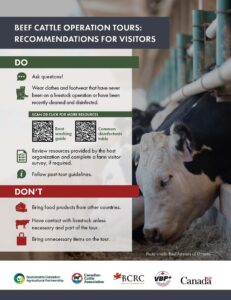
Before the tour, review all biosecurity information provided by the host and complete a farm visitor survey, if requested. Arrive wearing clean clothing and footwear that has not previously been worn around livestock or ensure clothing and footwear have been properly cleaned and disinfected.
During the tour, avoid unnecessary contact with livestock and follow instructions about where you can go and what you can touch. Leave any unnecessary items on the bus or in your vehicle and leave any out-of-country food at home. And, of course, ask questions and have fun!
After the tour, clean and disinfect clothing, footwear and equipment used on the tour. Monitor your personal health following the tour.
International farm visitors should take additional precautions, including avoiding livestock contact, declaring farm visits at border crossings and following the destination country’s quarantine requirements and entrance guidelines.
For more detailed requirements and recommendations for visitors, see Resources and Recommendations for Cattle Operation Visitors.
A successful farm tour takes more than having a good itinerary. Considerations should be built in from planning until the last pair of boots is disinfected and put away.
Whether you’re hosting, welcoming visitors or attending a farm tour, keep biosecurity in mind before, during and after the tour.
Get the Full Picture
The full 27-page guide, Tours of Beef Cattle Operations Biosecurity Resources and Recommendations, provides more details for planning, managing and attending beef cattle operation tours.
Share these resources with everyone involved. Good biosecurity is a team effort, and planning can help make farm tours a positive experience for everyone while minimizing unnecessary risks.
VBP+ certification is about demonstrating the good management practices in place on a beef cattle operation and having the knowledge and records to support them.
The VBP+ Standard outlines the knowledge, practices and records beef producers are expected to have in place to meet program requirements. For producers considering certification, understanding the Standard is a good place to start.
What Is the VBP+ Standard?
Think of the VBP+ Standard as a guidebook, setting out the knowledge, practices and records beef producers need to have on their operation to become certified.
VBP+ uses on-farm assessments to verify certified operations are meeting program standards. It is through these standards that auditors can confirm an operation is following the guidelines and meeting program requirements. On-farm assessments take place every five years, while interim record reviews and self-assessments provide producers with tools to stay on track and maintain ongoing compliance.
The goal isn’t simply to identify whether a practice is in place or a record exists. The assessment process can also identify areas where an operation is meeting expectations and where there are opportunities for improvement.
The VBP+ Standard covers 11 subject areas of beef production:
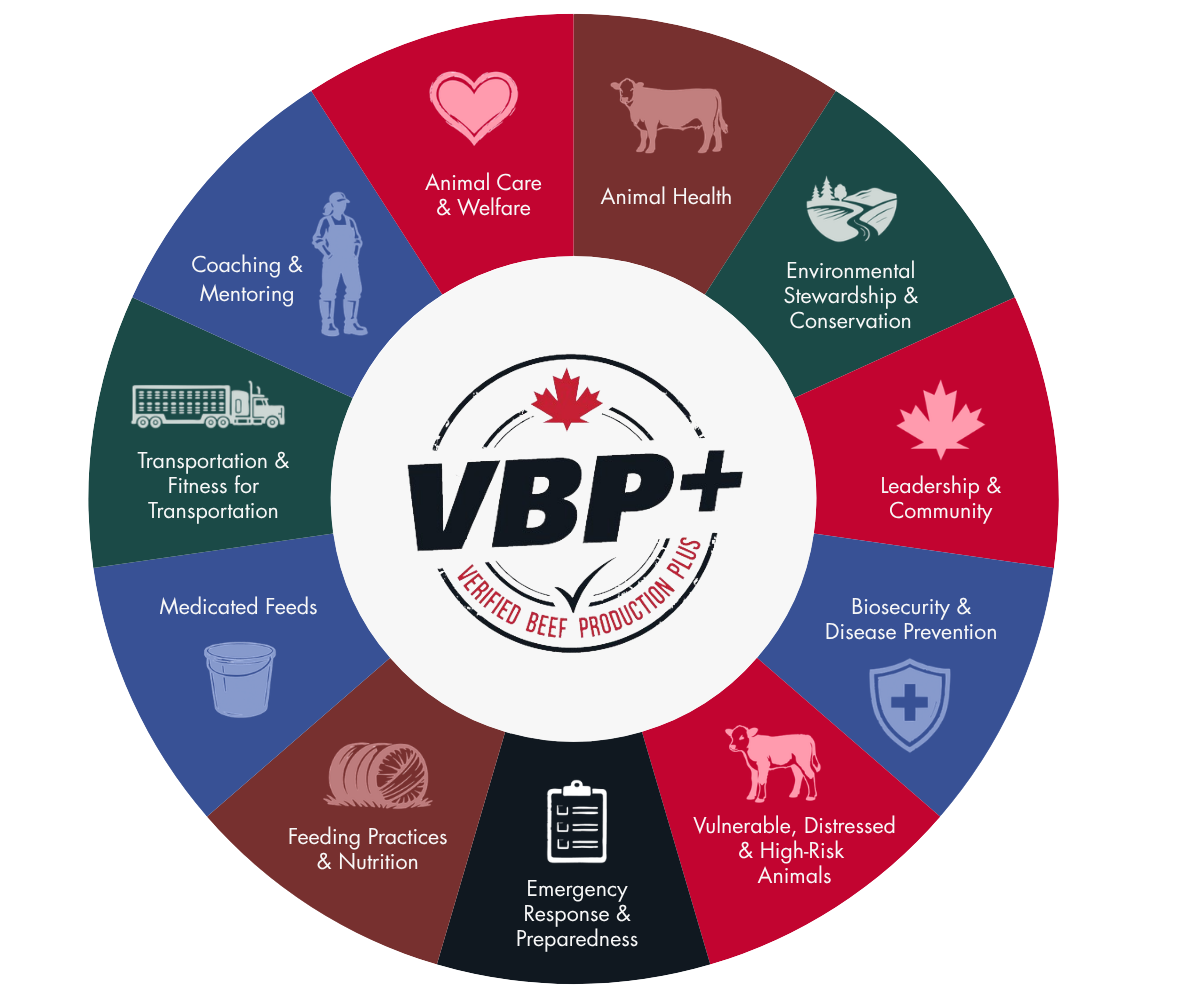
At first glance, that may seem like a long list. But the subject areas include expectations that align with many of the practices producers already include in running a successful and sustainable beef operation.
What Does the Standard Look Like on Farm?
The Standard gets more practical when you explore individual expectations.
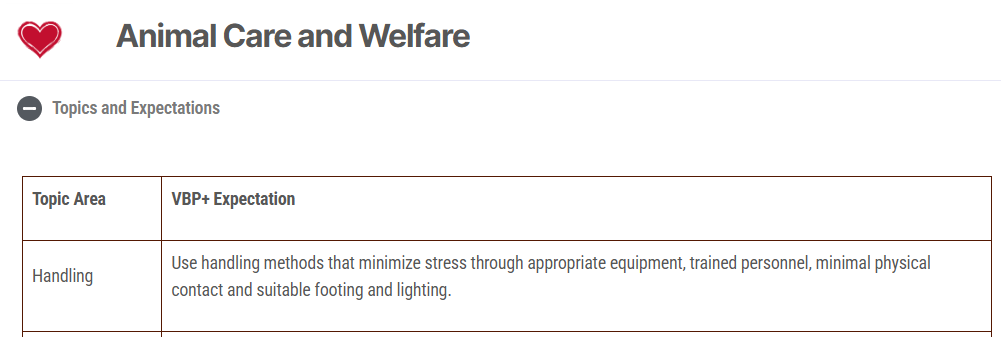
For example, within the subject area Animal Care and Welfare, producers are expected to use handling methods that minimize stress through appropriate equipment, trained personnel, minimal physical contact and suitable footing and lighting.
This could mean assessing handling facilities, considering how cattle move through them and ensuring everyone working cattle understands and practices low-stress handling techniques.
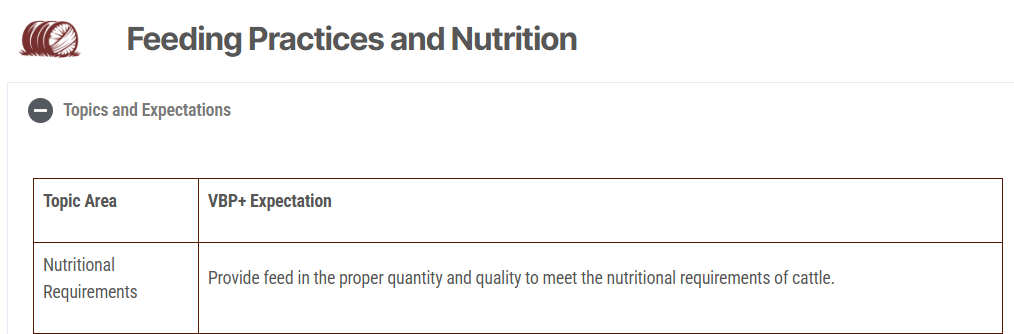
Under Feeding Practices and Nutrition, one requirement is to provide feed in the proper quantity and quality to meet the cattle’s nutritional requirements.
On farm, this could include feed testing, feed planning and ensuring the specific class of cattle on your operation has access to what they need.
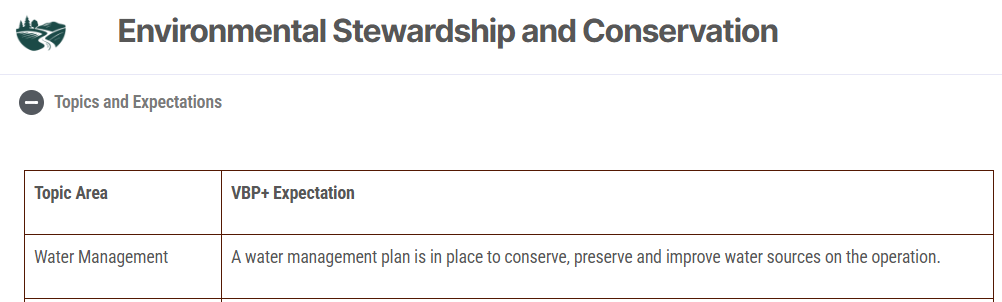
Similarly, environmental stewardship can also involve practical management decisions. Under Environmental Stewardship and Conservation, one criterion is having a water management plan in place to conserve, preserve and improve water sources on the operation.
This could include planned water testing and reducing access to wetlands to preserve riparian areas and natural water sources.
The VBP+ Standard also recognizes areas of farm management that extend beyond day-to-day operations. Included are subject areas that reflect the broader responsibilities and practices involved in beef farming and ranching.
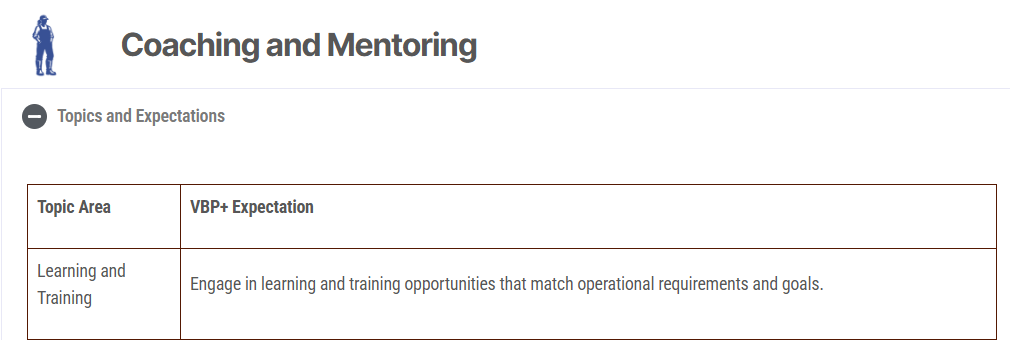
Under Coaching and Mentoring, producers and farm workers are encouraged to engage in learning and training opportunities that match operational requirements and goals. On your operation, this may look like pesticide safety training for farm personnel or completing a record-keeping course.
Continuous learning is a core part of VBP+. A range of science-based resources, developed with support from the Beef Cattle Research Council (BCRC), are available to encourage adoption of beneficial management practices, continuous improvement and innovation across Canada’s beef industry.
These examples highlight an important part of the VBP+ Standard – there is often more than one way to meet the expectations. Certification isn’t about adopting one specific management system. Rather, the VBP+ Standard outlines expectations that can be met through science-based practices that fit your individual operation.
Certification Is a Starting Point, Not an End Point
Whether preparing for an assessment or simply looking for ways to strengthen on-farm practices, reviewing the VBP+ Standard is a useful starting point.
The VBP+ Standard webpage provides an overview of the expectations across subject areas along with links to additional resources.
For full details, the downloadable VBP+ Standards is a comprehensive reference for the program.
A Common Foundation
While recognizing producers may use different management approaches to meet the Standard’s expectations, VBP+ Certification includes foundational requirements that apply across operations.
Certified producers:
These foundational requirements provide the basis for the more specific practices and expectations outlined throughout the VBP+ Standard.