SIMPLE.

PRACTICAL.

TRUSTED.

VBP+ BLOG & NEWS

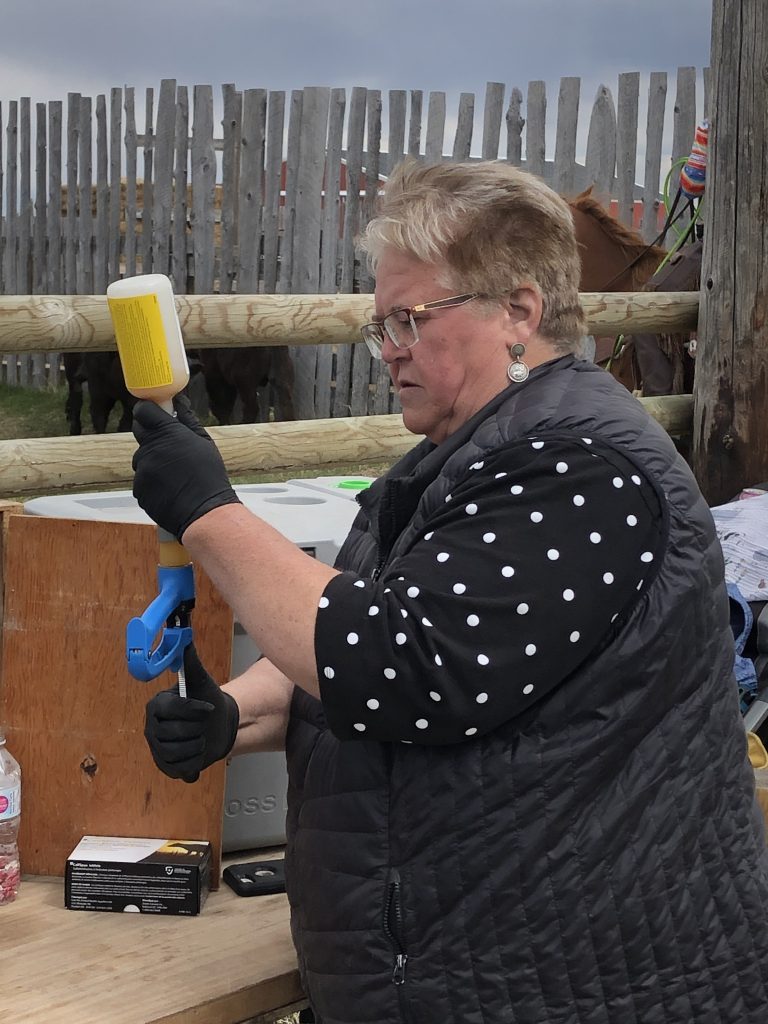
beef producer filling syringe
Having one person responsible for managing vaccines (mixing, filling syringes, monitoring temperatures in coolers) or other medications can increase efficiency and ensure good management practices to prevent cross contamination of vaccines and recommended needle changes in the branding pen. Photo credit: VBP+

The days are getting longer, the seasons are shifting, spring is on the way! On your beef cattle operation, the task of the season is changing too. Transitioning from calving season through seedstock sale season, spring means branding season is just around the corner.

The branding pen can be chaotic, with lots happening at once. A little preparation ahead of time can go a long way. The first step is determining what your spring processing protocol for young calves will be. If you have already had a discussion with your veterinarian about your annual herd health protocols, such as spring calf processing, you will likely have many of these answers. Not all operations are alike but here are some protocols to discuss with your veterinarian; vaccine protocol, pain mitigation protocols and implant protocols (if it applies to your operation). VBP+ has a herd health protocol template you can take to your veterinarian if one is not provided. You can find it here.

Once you have your product requirements, you can plan for the equipment needed  such as syringes, needles, sharps containers and animal markers to name a few Is the equipment you need clean and in good working order? Are your multi-dose syringes calibrated? Now is a good time to check. A malfunctioning syringe that dispenses either too much product can cost you money and run you short of vaccine. It’s a good practice to give your syringes a spring cleaning using only hot water. Never use any detergent/soap to clean syringes, as any residue can affect your vaccine. Also remember never to use a syringe that was used for antibiotics as your vaccine gun – when possible, label and use designated syringes for vaccines.

Planning for your people resources is important too. Depending on what your spring processing/branding protocol is, there will likely be multiple people descending on each calf either on the ground or in the table, many of them friends or family that help out once a year. Are they aware of any biosecurity concerns or protocols on your operation? Do they need a refresher on how to give sub-cutaneous and intramuscular injections properly and safely? A reminder on how to move around the pen to keep themselves, others and animals safe? Who do they go to if they have questions or if something goes wrong?

Create open communication with your volunteer crew about possible deviations that could occur during branding (ex. animal moved and missed giving the full injection, calf was let go before injection was given). The last thing you want is someone to make a mistake (for example, breaking a needle in an animal or double vaccinating) and you don’t know about it. A quick meeting or training session before the big event can help you to make sure everyone involved knows your operation’s on-farm food safety, biosecurity or animal care objectives and values.

Keep your individual and group treatment records handy to include any treatments and vaccinations done on branding day. It’s also a good idea to keep extra RFID tags around in case you find a calf that has lost one.

Sometimes, calves can have adverse reactions to vaccines. Keep yourself prepared with epinephrine on hand. You can also prepare yourself for other accidents or emergencies by keeping a first aid kit handy and having a plan to extinguish a fire around the branding pot.

Brandings are a good way to get many spring tasks knocked off the list prior to pasture turnouts and indulge in a little social connection with family and friends. Plan for a successful and safe branding day. You, your operation and your livestock will be the better for it.

The Canadian Beef Sustainability Acceleration Pilot (CBSA) hopes to achieve in one year what many in the industry have been trying to accomplish for years – deliver a certified sustainable supply chain to foodservice and retail customers.

Led by Cargill, Verified Beef Production Plus (VBP+) and the Beef InfoXchange System, the CBSA aims to sate demand from foodservice and retail companies for gate to plate tracking that verifies the production practices used in raising an animal as sustainable. What’s more, foodservice companies and retailers are helping facilitate the development of a sustainable supply chain in Canada through providing financial incentives for qualifying cattle.

VBP+ plays an important role in the development of a sustainable supply chain. Eligibility for the CBSA requires that all the places an animal stays throughout their lifetime are VBP+ Registered and that they be processed in an audited packing plant (currently Cargill High River). VBP+, a training and on-farm verification program for Canadian beef producers developed and managed by the CCA, is delivered through various provincial beef organizations across the country.

McDonalds, Loblaws, Swiss Chalet, and Original Joe’s are among the foodservice and retailers that have come forward to provide financial incentives for qualifying cattle. This is significant in terms of timing because they are providing financial incentive before they can make claims back to their customers. In other words, McDonalds, Loblaws, Swiss Chalet, and Original Joe’s are so committed to supporting certified sustainable beef (a program that meets commercial Canadian beef industry standards, unlike most other “certified” programs) they are willing to support the development of supply chains to provide it before they can reap the benefits in their stores. Now it is up to us, as producers, to build those supply chains.

Our role in CBSA as beef producers is simple. Complete the VBP+ verification process (including the audit) to become Registered and then try to ensure you sell your calves (or buy calves if you are a backgrounder or feedlot operator) to other VBP+ Registered producers. To get Registered and have your cattle qualify simply:

  1. Be or become a VBP+ Registered Producer;
  2. Be or become a BIXS member;
  3. Age verify or move your cattle to the Canadian Cattle Identification Agency (CCIA) database (either directly or through BIXS).

If you have any questions, please feel free to reach out directly to me or contact your local VBP+ Provincial Coordinator. Stay tuned for updates.(Reprinted with permission from the Canadian Cattlemen’s Association)

My name is Cecilie Fleming and I am a seedstock and cow calf producer from west of Granum, in southwest Alberta. Our operation is a longtime established farmstead surrounded by ranching and feedlot production. Our place consists of farmland, riparian areas, and tame and native grassland ecosystems supporting native species. Is everything perfect on our place? – No. But being a part of Verified Beef Production Plus (VBP+) as Registered Producers has helped us look inward at our operation to see how we can improve and minimize risk.

I sit as the National Chair of the VBP+ Management Committee, the roll of which is to set policies ensuring the VBP+ program is meaningful and usable for beef producers and delivers value. The management committee consists of national producer representation by Province or Region. VBP+ is something that beef producers in Canada can be proud of as an excellent and affordable tool to help them tell their story of beef sustainability to the world.

We are a business based on science, selling to consumers, who often choose based on emotion, through marketers who interpret what consumers need. This relationship is why it is critical for beef producers in Canada to be involved to ensure marketers are telling our truths. VBP+ is the national program that can help producers help themselves by being a part of the Sustainable Beef movement.

Who: Registered VBP+ farms, ranches and feedlots are run by producers who recognize the need to be a part of a national verification system to meet the needs of some of our end users. They are producers willing to invest time and resources to confidently make the claim of VBP+ Registered status as VBP+ positions itself to be a delivery agent of beef sustainability verification nationally.

What: A Registered VBP+ Producer takes training in on-farm food safety, biosecurity and animal care, they assess their operation’s environmental wellbeing, as well as the operation’s human resources and community involvement. The training and assessments ensure producers document, keep records, are prepared to meet a 3rd party audit, and take part in annual assessments to maintain their registered status.

When: A producer can become involved with VBP+ any time of year by contacting their Provincial VBP+ Coordinator and initiating the process. There are 3 modes of training: scheduled in person workshops, scheduled webinars and anytime online training. Once training is complete, producers begin keeping appropriate records for a set period of time (6 months for cow-calf, 3 months for feedlots) leading up to their first audit. They prepare by completing a pre-audit checklist and then a 3rd party auditor will be assigned to their operation. The auditor contacts the producer to schedule the on-farm audit at the producer’s convenience.

Where: Everywhere beef production takes place in Canada. VBP+ is a national verification program available to all beef producers in the supply chain.

Why: We have end users asking for beef raised sustainably. If the end user is going to make the claim that some or all their beef products are ‘sustainably raised’, they must be a part of a robust program with documentation, audits, rigor and transparency to backstop those claims. VBP+ and the Canadian Roundtable for Sustainable Beef (CRSB) are working together to establish equivalency so Registered VBP+ beef operations would qualify to be recognized as Verified Sustainable Operations. Clearly, we did not want multiple end users building lists of sustainability criteria where producers would face trying to meet the needs of many differing platforms. The CRSB has been a great venue to collaborate and come to consensus on what defines beef sustainability in Canada. The guidance enables producers to tell their story and demonstrate they are doing things right and on a path of continual improvement. Being a Registered VBP+ Producer in good standing would, in time, allow you to make the claim of Sustainably Raised Beef.